
When the Audience Is Elsewhere

A reflection on circulation, spectatorship, and the afterlife of ritual.
A room once held its own meaning.
What happened there belonged first to those who witnessed it. To attend was to see. To see was to participate. Ceremony moved through bodies gathered in one place, and whatever meaning it carried remained, for the most part, within the architecture that held it.
Now the room is only the beginning.
Before the music ends, the images are already preparing to travel. Before the flowers fade, the moment has entered its afterlife. What was once contained by place now moves outward, toward viewers who were never invited, never present, and yet somehow already anticipated.
This is not simply a matter of sharing.
It is a structural change in ritual.
The event no longer ends when the room empties. It continues in circulation, through photographs, edited sequences, reposted fragments, and the quiet logic of distant viewership. Its meaning is no longer held only by those who were there. It expands into interpretation elsewhere.
The Room Is No Longer the Limit
For much of ceremonial history, attendance and witness were closely bound.
Ritual has always required spectators. A procession needs onlookers. A wedding needs witnesses. A formal celebration asks not only to be felt, but to be recognized. Ceremony is never entirely private because its meaning depends, at least in part, on being seen and understood within a social world.
But historically, that recognition depended on presence.
To witness was to stand in the church, the garden, the ballroom, the square. To understand the event was to encounter it in real time, within its setting, among its gestures, through its sequence and scale.
Now that condition has changed.
A person may experience the event later, through image rather than attendance. They may know it only as atmosphere, framing, and impression. They may never hear the music, enter the room, or understand the duration of what unfolded. And yet their encounter still becomes part of the event’s meaning.
The celebration no longer lives only in the room.
It lives in its circulation.

The Anticipated Viewer
The absent audience is not passive.
It is imagined in advance.
This viewer affects what becomes legible as the story of the event. Not every detail is designed for those physically present. Some details are designed to read later. Some gestures are calibrated not only for experience, but for transmission.
The bouquet held a little higher.
The aisle left visually clean.
The table arranged for depth and symmetry.
The embrace repeated so it can be captured more clearly.
The pause that allows the image to settle before the moment moves on.
These decisions are not always vain, and they are not always explicitly discussed. Often, they are simply understood. Contemporary ritual unfolds with an awareness that it will be encountered again elsewhere, under different conditions, by people who will receive only selected fragments of the whole.
This is where the event begins to divide into two versions of itself.
The first is lived.
The second is read.
Intimacy Under Circulation
This is where the tension begins.
The more intimate a ritual is meant to feel, the more complicated its circulation becomes.
A vow, a glance, a family embrace, a hand placed quietly on a shoulder, a parent adjusting fabric before an entrance. These gestures can feel profoundly private even when performed in public. Their meaning rests in proximity, in relationship, in shared time.
But once they travel, they begin to operate differently.
They become symbols.
Proof.
Narrative fragments.
Social signals.Visual shorthand for feeling.
This does not necessarily empty them of meaning. But it changes the kind of meaning they carry.
What was once personal becomes legible to strangers. What was once felt in full becomes known in part. The image offers access, but it also abstracts. It preserves the gesture while detaching it from the room that gave it texture.
And yet this is also how contemporary memory often works.
What circulates later does not merely represent the moment. It becomes one of the ways the moment is remembered. The image is no longer only an echo of intimacy. It becomes part of intimacy’s record.
That is the paradox.
What is most personal is often what travels furthest.
Spectatorship Without Attendance
Ritual has always required witnesses. What has changed is that witness no longer depends on presence.
This distinction matters.
The old ceremonial world and the contemporary one are not separated by the existence of spectatorship. They are separated by their conditions. A coronation, a society wedding, a religious procession, a debut, a civic ceremony, all depended on viewers beyond the central figures. Ritual has never belonged exclusively to the self.
But the witness, the guest, and the viewer were once closer together.
The witness carried ceremonial weight.
The guest carried social presence.
The viewer, if there was one beyond the room, arrived later through description, rumor, portraiture, or reportage.
Now those roles have split.
A guest may be present without truly witnessing.
A viewer may interpret the event without ever attending.
A distant audience may absorb its symbols more quickly than the people who actually occupied the room.
This is a new kind of spectatorship.
Not ceremonial witness in the traditional sense, but remote witness. Visual witness. Cultural witness. A form of participation that depends not on shared space, but on mediated encounter.
One does not have to be in the room to admire the event, judge it, borrow from it, desire it, or assign it meaning. One does not have to attend in order to become part of its social afterlife.
That changes what celebration becomes.

The Afterlife as Design Condition
The afterlife of the event is no longer accidental.
It is one of the event’s design conditions.
This is perhaps the quietest but most significant shift. Celebration is no longer shaped only by how it feels in the moment. It is shaped by how it will read later. The visual record is not merely a byproduct of the event. It is often embedded in its construction.
This influences photography, of course, but not only photography.
It influences timing.
Styling.
Spacing.
Architecture.Fashion.
Gesture.
The duration of an entrance.
The clarity of a table.
The height of candlelight.
The choice to simplify a background so the subject will carry.
A contemporary event often contains two timelines at once.
The lived experience and the circulated experience.
One unfolds in real time, among bodies and voices. The other begins almost immediately, moving outward through image, caption, sequence, and replay. The first belongs to those present. The second belongs to a broader field of interpretation.
And increasingly, the second is built into the first.
Like a façade designed not only for those inside the house but for the street that will read it, the contemporary event often carries an outward intelligence from the beginning.
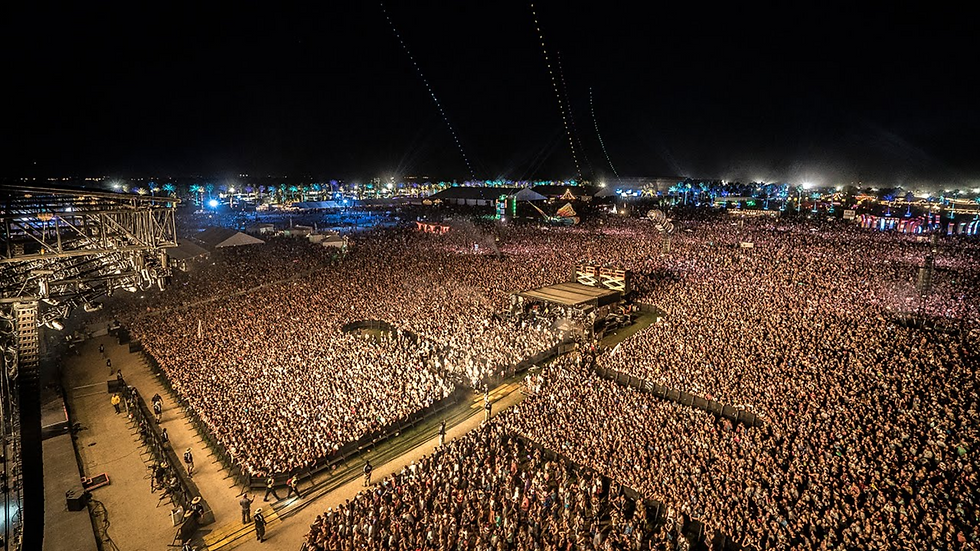
Intimacy Beside Projection
This does not mean ritual has lost its intimacy.
It means intimacy now exists beside projection.
A modern celebration still gathers people into a room. It still depends on presence, on timing, on atmosphere, on the subtle force of being there. But it also carries an outward orientation. It expects to be seen again. It anticipates departure. It is shaped, in part, by the knowledge that its meanings will continue beyond attendance.
The event still belongs to those who were there.
But it no longer belongs only to them.
Because in contemporary ritual, the room is not the boundary.
It is the point of departure.
The room still matters. It simply no longer keeps the whole meaning to itself.
This question of spectatorship also echoes The Theater of Power, where ritual begins as staging before it becomes circulation.
Ritual Field Notes is an ongoing series exploring ceremony, symbolism, and the architecture of meaning.


Comments