
The Camera Is Now a Guest

Updated: Apr 6
A reflection on presence, documentation, and the choreography of being seen.
There was a time when a camera documented a moment.
Now, the moment waits for the camera.
A pause stretches half a second longer.
An entrance begins only when the lens is ready.
A gesture is repeated, not because it lacked meaning, but because meaning now expects capture.
This is not simply a technological shift.
It is a cultural one.
The camera no longer stands outside the celebration, observing from its edge.
It moves within it.
It influences timing, posture, sequence, and attention.
It is no longer recording the ritual.
It is participating in it.

When Documentation Becomes Design
For much of modern life, memory came first and documentation followed.
A photograph preserved what had already happened.
A video served as evidence of presence.
The event belonged to those in the room, and the camera arrived afterward as a witness.
Now the order has changed.
Documentation no longer follows the event.
It helps shape it.
Moments are designed with their afterlife in mind.
The image is anticipated before it exists.
The replay is considered while the room is still being arranged.
What once lived as memory now begins as a shot list, whether spoken or not.
This does not make the experience false.
It makes it structured differently.
Celebration is no longer designed only to be lived.
It is designed to be seen again.
The Invisible Guest
Every event has its visible guests.
The family in the front row.
The friend who notices everything.
The host whose attention quietly guides the room.
But contemporary ritual often includes another guest, one rarely named and always accommodated.
The camera has a position.
A priority.
A path.
It requires clearance down the aisle.
It favors certain angles over others.
It alters where people stand, when they begin, and how long they remain still.
Lighting adjusts for it.
Timelines bend around it.
Entrances are paced with it in mind.
Without making a sound, it changes the behavior of the room.
Like any influential guest, it reshapes the atmosphere simply by being expected.
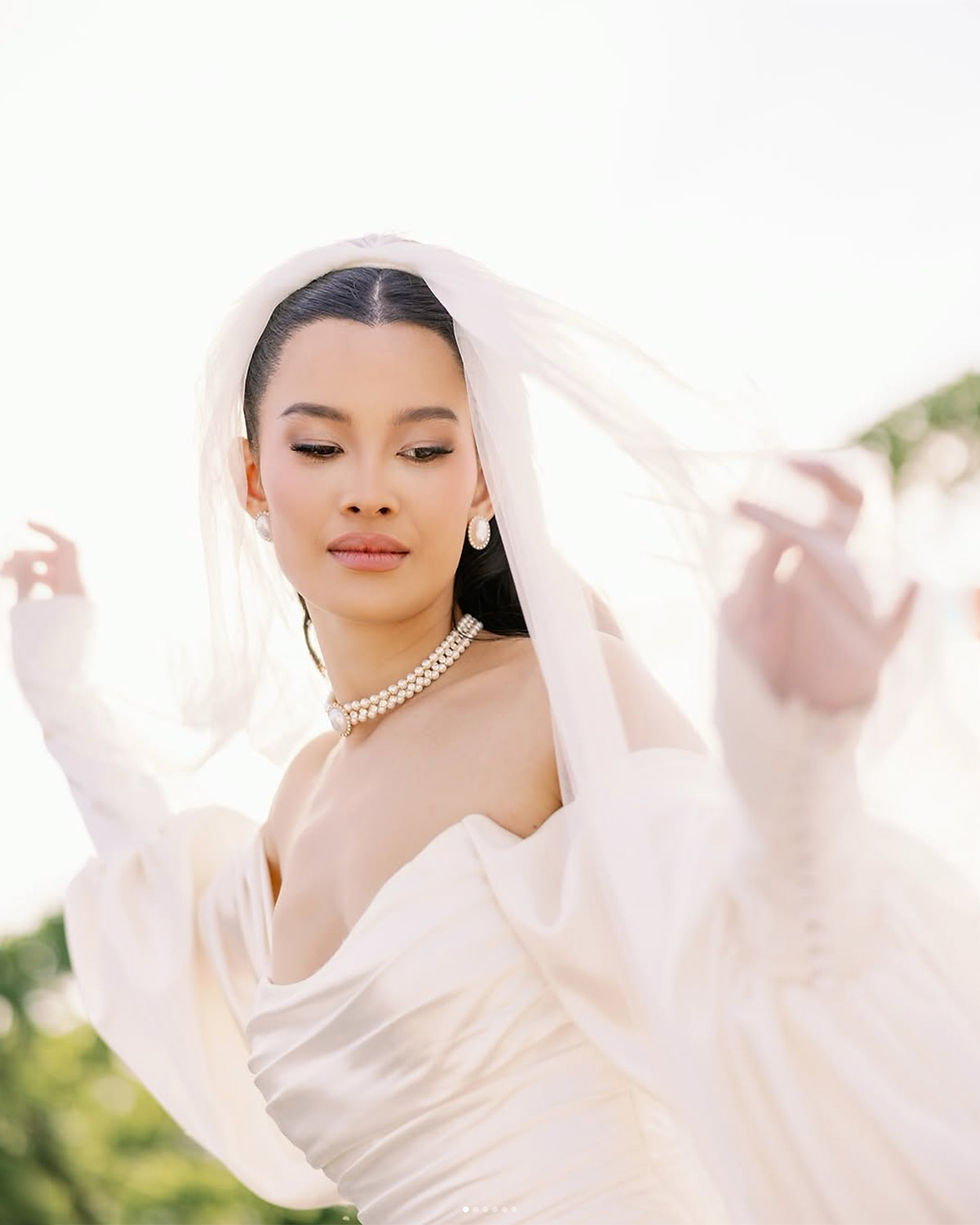
Choreography for the Lens
Once you begin to notice it, you see it everywhere.
The couple who pause at the top of the aisle a breath longer than necessary.
The toast that waits for the videographer to reposition.
The embrace repeated, gently, for another angle.
The procession timed not only for the people present, but for the frame that will preserve it later.
These gestures are often described as performative, as though performance and sincerity must be opposites.
But ritual has always involved performance.
Ceremony depends on repetition, sequence, and form.
What has changed is not the existence of choreography, but the audience for which that choreography is now refined.
The lens has joined the room.
And once it does, behavior adapts.
Not always artificially.Often intelligently.
People understand, instinctively, that some moments will outlive the hour in which they occur.
So they adjust their bodies to meet that future.
The New Architecture of Attention
Traditional ceremony was organized around the people physically present.
The witnesses.
The officiant.
The procession.
The room itself.
Now attention is split.
There is the live audience, and there is the anticipated one.
The people seated in the chairs, and the people who will later encounter the event through images, reels, edits, and archives.
This changes the architecture of the moment.
A ceremony in a basilica still follows the logic of permanence.
Stone, symmetry, repetition, inherited form.
Its authority comes from continuity.
A contemporary celebration designed for digital circulation operates differently.
It still has choreography.
It still relies on sequence.
But its rhythm is often calibrated for capture.
Not less meaningful.
Not less intentional.
Simply organized under a different visual regime.
The room is no longer the only stage.

The Paradox of Preservation
There is, of course, a paradox at the center of all this.
The more we try to preserve a moment, the more we alter it.
To document something is to frame it.
To frame it is to make choices.
To make choices is to shape the experience itself.
And yet those images often become the memory.
Long after the music ends, what remains is not only what was felt in real time, but what was recorded, shared, edited, and revisited.
The photograph becomes the reference point.
The video becomes the emotional proof.
The archive becomes part of the event’s meaning.
This is why the camera matters so much.
It does not simply collect memory.
It helps produce it.
When the Room Knows It Is Being Seen
Power once relied on architecture, procession, and ceremonial distance to establish itself in the room.
Today, visibility introduces another layer.
The event is not only unfolding.
It is aware of its own future image.
That awareness does not erase intimacy.
But it does complicate it.
People now move through ritual with dual consciousness.
They are present inside the moment, while also understanding how the moment will appear from outside it.
This is one of the defining conditions of contemporary celebration.
We do not simply gather.
We gather with the knowledge that the gathering will circulate.
And circulation changes form.
When Observation Becomes Participation
The camera does not replace the guest.
It becomes one.
It arrives with preferences.
It receives accommodation.
It changes pacing without speaking.
It influences what matters, what pauses, what repeats, and what endures.
Like any guest with influence, it alters the way the room behaves.
Not because presence has disappeared. But because presence now shares the space with documentation.
The modern ritual is no longer designed only for those who were there.
It is also designed for those who will encounter it later, through the carefully framed afterlife of images.
And once that happens, the camera is no longer outside the ceremony.
It is seated within it.
Portraiture once arrived after the occasion, as a formal record of what had taken place. Now the image often sits much closer to the event, shaping posture, pace, and even anticipation from within.
This reflection sits in conversation with The Theater of Power, where ritual first appears as staging, and with When the Audience Is Elsewhere, where that staging continues beyond the room through circulation.
The camera does not simply preserve the event. It quietly teaches the event how to appear.
Ritual Field Notes is an ongoing series exploring ceremony, symbolism, and the architecture of meaning.


Comments