
The Politics of Elegance

Updated: Mar 24
A reflection on elegance, wedding style, and the quiet language of luxury design.
The Word We Use Too Easily
We were sitting across a small table, paper samples spread between us. Neutrals. Texture. Subtle sheen catching the light.
They had a clear request.
“We want it to feel elegant.”
The word arrived early. Almost instinctively. As it often does.
But elegance is not a color.
It is not a fabric.
It is not a price point.
It is a language.
And like all languages, it carries history. Geography. Power.
Elegance has always been political.
Not in the partisan sense. In the cultural one. It signals belonging. It implies education. It suggests restraint. Or, at times, the performance of restraint.
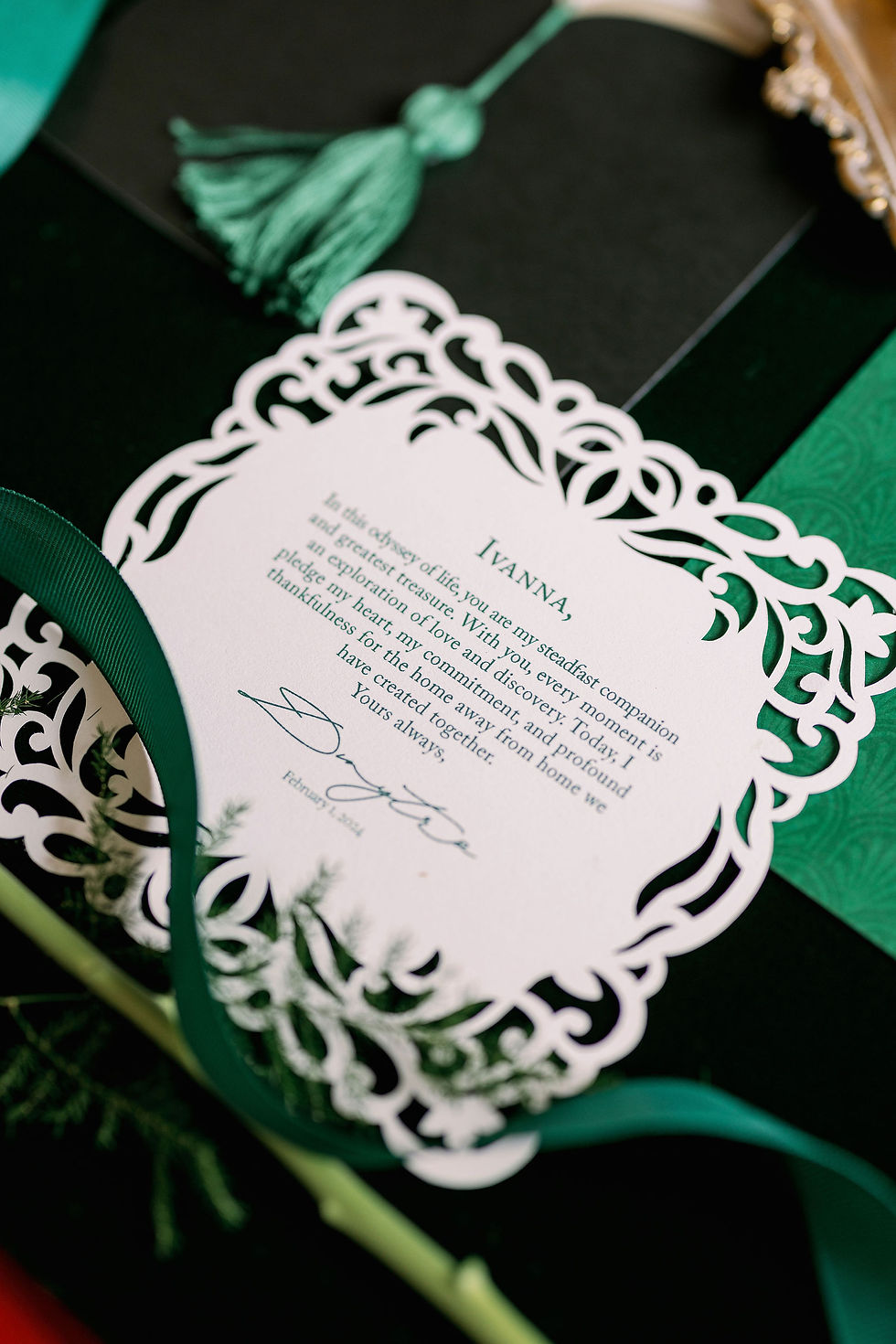
In the world of weddings and events, elegance is treated as universal. Yet what reads as elegant in one room may feel excessive in another. What feels refined to one guest may feel distant to the next.
There is the elegance of understatement.
And the elegance of display.
The elegance of inherited codes.
And the elegance of newly acquired symbols.
When couples tell me they want elegance, I do not reach for ivory linen or crystal stemware.
I begin by listening.
Because what they are often describing is not a style.
It is a position.
And design, when it is honest, does not impose a position.
It reveals it.
Inherited and Acquired Codes

Elegance is often spoken about as if we all recognize it instinctively.
But recognition is learned.
Some forms of elegance are inherited. Absorbed without instruction. In the cadence of a dinner table. In the scale of a room. In the way a host moves through space without announcing themselves. Nothing feels curated because nothing needs to be proven.
Other forms are acquired. Studied. Assembled. Emulated. There is nothing lesser about this. Cultural literacy can be developed. Taste can evolve. But acquisition often carries urgency. A desire to signal arrival. To demonstrate fluency.
The difference is subtle. It rarely announces itself in price or brand. It reveals itself in volume.
Inherited elegance lowers its voice.
Acquired elegance sometimes raises it, just slightly.
In celebration, this distinction becomes visible. Not in the gown, or the venue, or the floral budget, but in the intention behind them. Is the room meant to envelop, or to impress? Is the design meant to communicate identity, or achievement?
Most couples exist somewhere in between. Influenced by aspiration. Shaped by memory. Negotiating what feels authentic and what feels expected.
When elegance becomes a badge, it tightens.
When it becomes alignment, it relaxes.
Design can sense the difference.
The Performance of Taste
We live in a time where celebration is rarely private.
Long before the ceremony begins, it has already been imagined through a lens. Saved. Shared.
Anticipated.
Taste, once cultivated quietly over years, now circulates in seconds.
There is a shift that happens when design is created not only for the room, but for the image of the room. Florals grow taller. Gestures more declarative. The event anticipates its own documentation.
This is not inherently problematic. Photography has always been part of ritual. Memory has always been curated.
What is new is scale.
Scale changes behavior.
When the camera becomes the primary audience, elegance can harden. It begins to announce rather than to suggest.

True elegance rarely performs. It settles.
It allows guests to feel enveloped rather than instructed on what to admire.
In consultation rooms, the distinction is perceptible. Some references are chosen because they resonate. Others because they impress. The difference is rarely verbalized.
Performance is not the enemy of design. But when performance replaces intention, the room grows louder than it needs to be.
And elegance, at its core, is rarely loud.
Paper as Equalizer
In every celebration, there is a moment before the spectacle.
Before the music swells. Before the room fills. Before the first photograph is taken.
It arrives in an envelope.
Paper does not perform. It asks to be opened, not observed from a distance. Its scale is human. Its gesture private.
When elegance is unsettled, paper reveals it immediately. A suite can be ornate yet uncertain. Minimal yet unconsidered. Loud without saying anything at all.
When alignment is present, paper feels assured.
Typography sits where it belongs. Space breathes. Color supports rather than declares. The unfolding feels measured.
Paper becomes equalizer. It softens performance. It clarifies intention. It translates aspiration into language that can be held.
Long before guests enter the room, they encounter its voice.
And that voice rarely lies.

What We Mean When We Say Elegant
When couples say they want their celebration to feel elegant, they are rarely describing florals or fabric.
They are describing how they wish to be perceived. How they wish to feel in the room. How they wish others to feel in their presence.
Elegance, in that sense, is not decoration. It is posture.
The ability to host without announcing oneself as host. To design without proving one has designed. To gather without performing the act of gathering.
Some inherit this posture. Others cultivate it over time. Most navigate somewhere in between.
There is no hierarchy in that. Only awareness.
Elegance does not reside in abundance or restraint. It resides in alignment.
When a celebration aligns with the couple who inhabits it, nothing feels excessive. Nothing feels diminished. The room settles. The gesture softens. The design breathes.
And the word elegant no longer needs to be declared.
Because true elegance does not ask to be recognized.
It recognizes itself.
Ritual Field Notes is an ongoing series exploring ceremony, symbolism, and the architecture of meaning. Because when narrative defines a celebration, design does not decorate the moment. It authors it.


Comments