
The Theater of Power

Updated: Apr 6
A reflection on ceremony, authority, and the architecture of influence.
We were standing beneath a vaulted ceiling.
Striped arches rising in red and ivory rhythm above us.
The kind of space that alters posture before it alters thought.
Voices soften.
Steps slow.
The room does not ask for attention.
It commands it.
Before a single word is spoken, ceremonial space has already said everything.
The height of the ceiling.
The direction of the aisle.
The distance between chairs.
Architecture begins the conversation long before ceremony does.

Architecture Announces Authority
Power rarely appears in neutral spaces.
It prefers rooms that already understand its language.
Across Buenos Aires, many ceremonial buildings echo the palaces of Europe.
Palacio Paz.
Palacio San Martín.
The golden halls of the Teatro Colón.
They were not designed simply to host events.
They were designed to stage hierarchy.
Wide staircases slow the body.
High ceilings amplify silence.
Long sightlines transform an entrance into a procession.
Before anything begins, the room has already instructed its guests how to behave.

Ceremony and Inheritance
Some ceremonial spaces carry meaning long before any celebration takes place within them.
My own wedding took place in the Basilica of María Auxiliadora in Buenos Aires.
A Neo-Romanesque church whose architecture quietly carries the language of ritual.
Rounded arches guide the eye forward.
Columns repeat in rhythm along the nave.
The altar anchors the entire composition.
The space was not designed merely to gather people.
It was designed to guide them through ceremony.
Jorge Bergoglio, long before the world knew him as Pope Francis, was baptized there.
Years later, both of my children would be baptized beneath the same vaulted ceiling.
A relative who once served alongside him officiated the mass at our wedding.
Architecture rarely announces these histories.
Yet they remain present in the space.
Layered into the rhythm of ceremony.
Authority, in places like this, is not imposed.
It is inherited.
Spectacle alone does not create meaning.
Structure does.
As explored in When Spectacle Becomes Ritual, performance becomes powerful only when it follows a recognizable architecture.
Ceremony as Choreography
Ceremony works because it unfolds through sequence.
Arrival.
Procession.
Witness.
Declaration.
Celebration.
Each moment builds upon the previous one.
Architecture frames the ritual.
Movement organizes attention.
Symbol gives the moment continuity with the past.
What appears spontaneous often follows choreography refined over centuries.
Spectacle alone does not create meaning.
Structure does.
As explored in When Spectacle Becomes Ritual, performance becomes powerful when it follows a recognizable architecture.
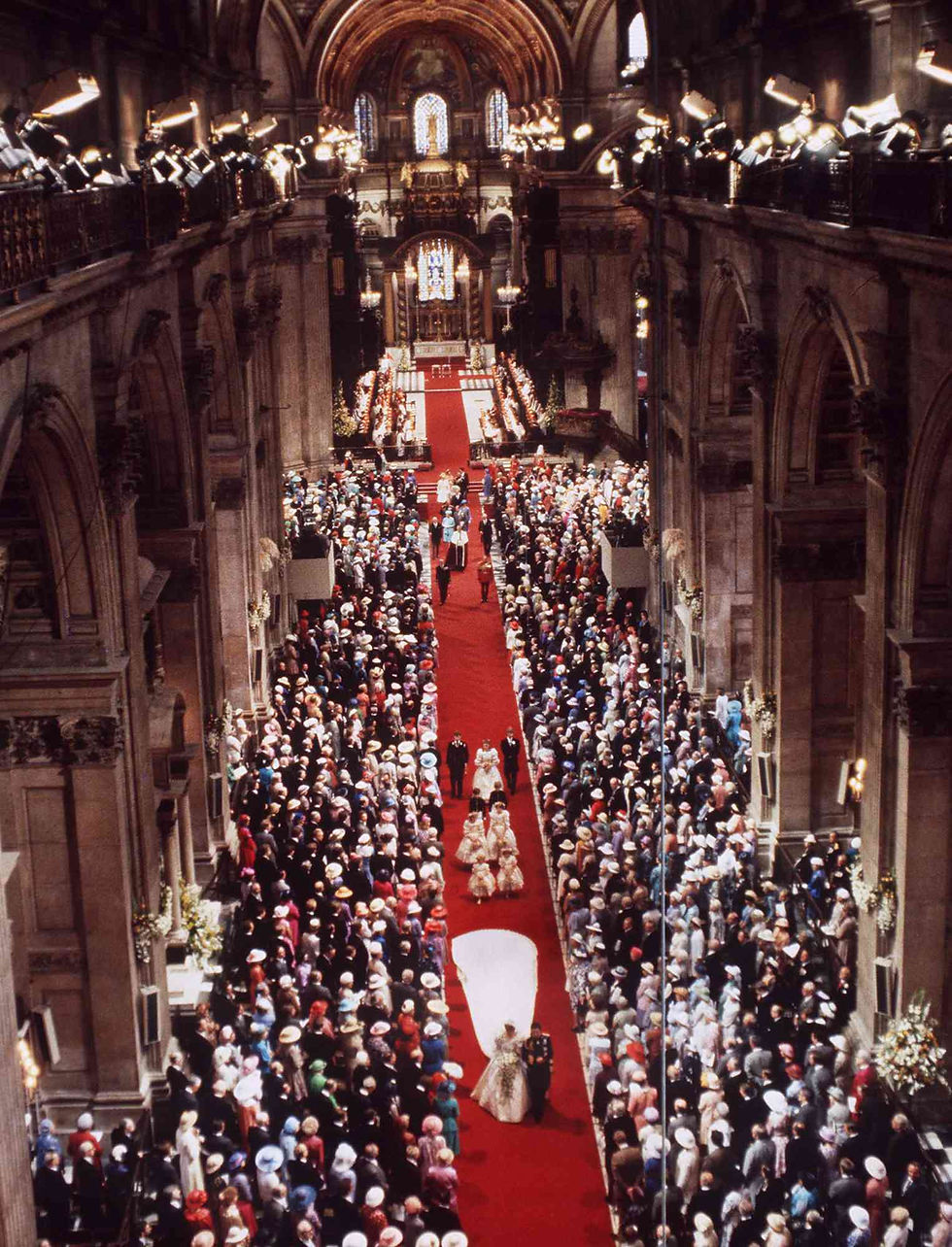
Royal Ceremony as Global Theater
Few moments illustrate this better than royal weddings.
When Princess Diana married Prince Charles in 1981, the ceremony unfolded inside St. Paul’s Cathedral before a global audience of hundreds of millions.
The cathedral magnified the procession.
The aisle became a stage.
Every step along it reinforced a narrative larger than the couple themselves.
The wedding did not simply unite two individuals.
It reaffirmed the mythology of monarchy.
A similar choreography appeared decades earlier when Grace Kelly married Prince Rainier III of Monaco.
Hollywood met royalty beneath cathedral arches.
Cinema and monarchy merged into a single spectacle of legitimacy.
Ceremony, once again, performing power.
The Architecture of Celebration
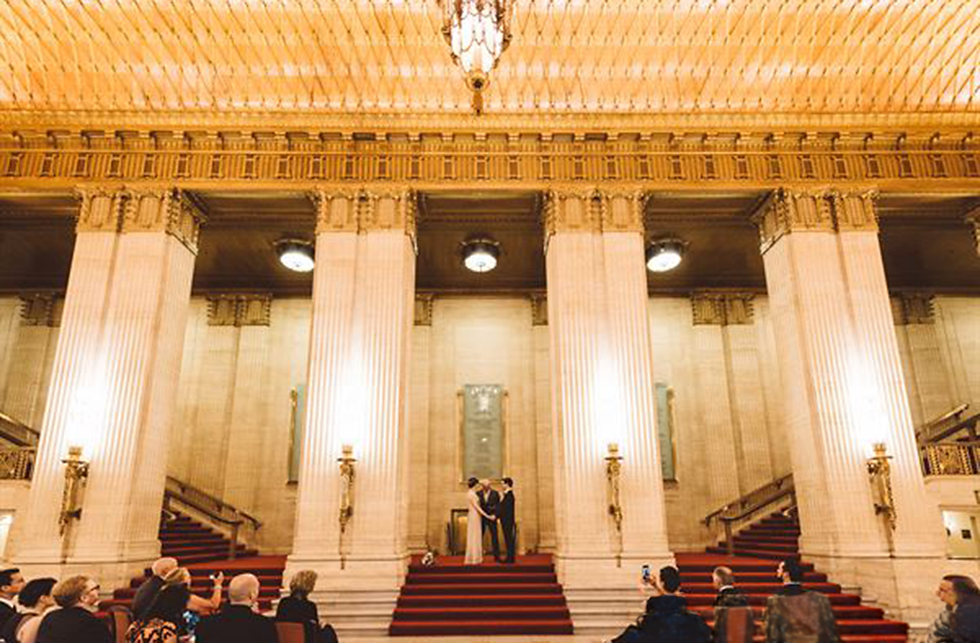
Most modern celebrations do not unfold inside palaces or cathedrals.
Yet the underlying logic remains unchanged.
An aisle echoes the procession of a court.
An invitation introduces the narrative long before guests arrive.
A reception space guides the movement of the evening.
Scale changes.
The architecture of ceremony does not.
Design becomes the medium through which private celebrations borrow the language of public ritual.
Not to imitate power.
But to give meaning structure.

When Ceremony Speaks
Power has always understood something that design sometimes forgets.
Space shapes behavior.
Sequence shapes memory.
Symbol shapes meaning.
Ceremony is not decoration.
It is architecture performed in time.
And whether it unfolds beneath the domes of a cathedral, inside the halls of a palace, or along the aisle of a wedding celebration, the principle remains the same.
A carefully designed ritual allows a moment to become something larger than itself.
Something remembered.
Ritual Field Notes is an ongoing series exploring ceremony, symbolism, and the architecture of meaning.


Comments