
What a Stationery Quote Really Includes

A Studio Note on templates, finishes, and why the true cost of a suite is shaped by structure, materials, and the level of design behind it.
At first glance, stationery pricing can feel confusing.
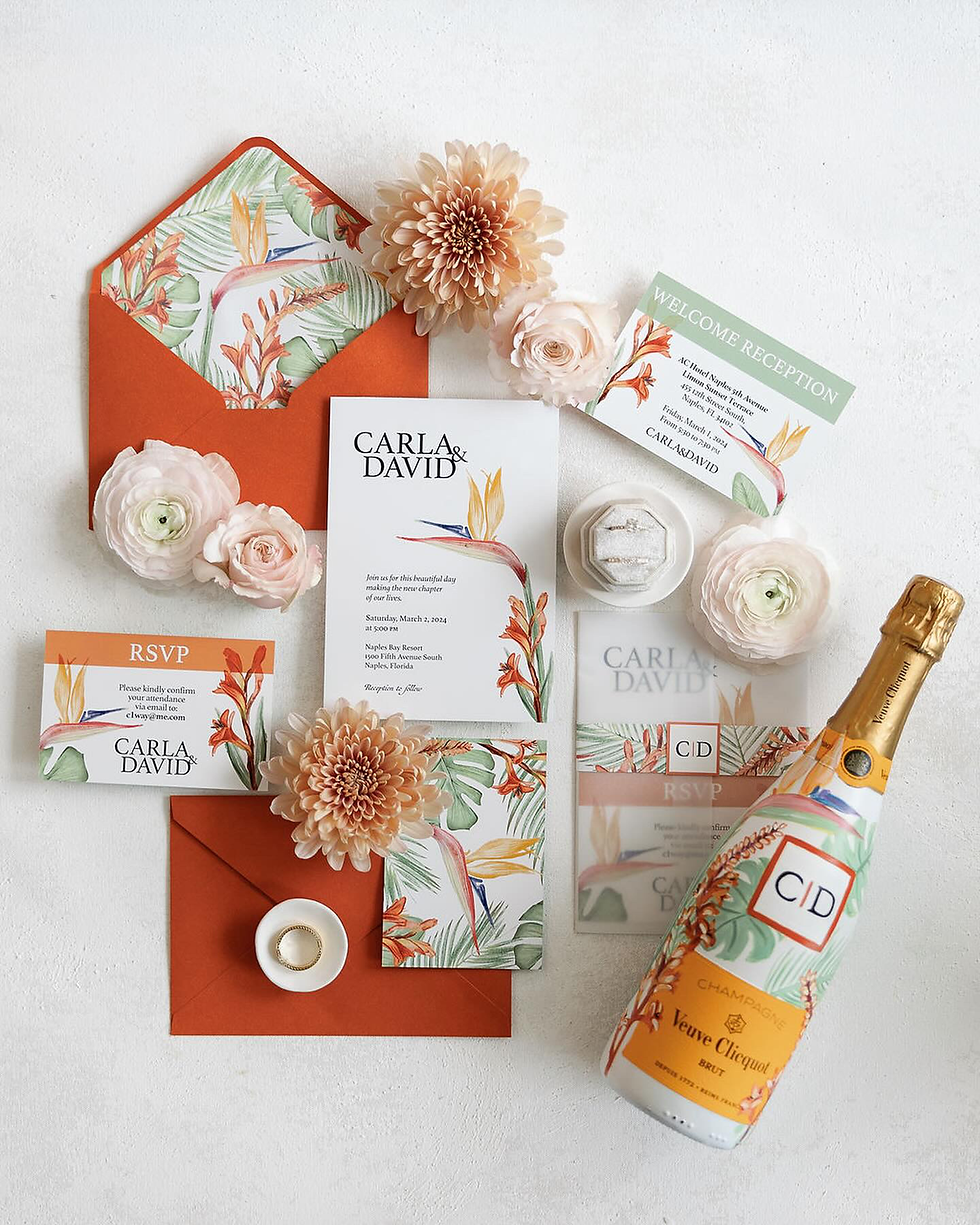
A suite may appear simple: an invitation, an envelope, perhaps a details card, a liner, a ribbon, a wax seal. Seen as individual pieces, each element can seem small. And because so many online platforms present wedding invitations through very low starting prices, it is easy to believe that a complete suite should cost only slightly more than the printed card itself.
But stationery does not work that way.
A wedding invitation suite is not priced only by the presence of paper. It is priced by the decisions behind the paper.
The format.
The quantity.
The printing method.
The paper weight.
The envelope quality.
The number of pieces.
The finishing details.
The assembly.
The addressing.
The time spent refining the design until every element belongs together.
What begins as a low advertised price often changes quickly once the real choices are added. Upgraded paper, specialty envelopes, envelope liners, layered cards, foil, embossing, letterpress, wax seals, ribbon, belly bands, addressing, postage, and assembly can transform the final cost. By the time a suite begins to feel more complete, the price may no longer resemble the starting number that first seemed so appealing.
That does not mean one option is wrong and the other is right.
It means they are not the same kind of service.
Selection Is Not the Same as Personalization
Many online invitation platforms offer personalization through a menu of choices.
You may be able to change a color, select a ribbon, choose an envelope, switch a font, or add a liner. These changes can be useful. They can make a template feel more aligned with a couple’s palette or event style.
But selection is not the same as personalization.
True personalization begins before the design exists. It considers the couple, the celebration, the setting, the formality, the guest experience, the materials, the sequence of pieces, and the tone the invitation needs to carry. It asks why something belongs, not only whether it is available.
A template begins with a finished design and allows adjustments around it.
A bespoke suite begins with the event and builds a design language from there.
That distinction matters because it changes the role of every decision. A ribbon is not simply a ribbon. A liner is not simply a decorative interior. A paper choice is not simply a heavier upgrade. Each element has to support the same visual and tactile direction.
When those choices are made from a drop-down menu, they may coordinate.
When they are designed as part of a system, they can communicate.

The House Analogy
Stationery is a little like building a house.
Two houses may have the same square footage, but they will not cost the same if one uses builder-grade finishes and the other uses custom millwork, stone, plaster, specialty lighting, and architectural detailing.
The footprint matters.
But the finishes matter too.
So does the labor required to install them correctly.
A wedding invitation suite works in a similar way. Two suites may both include an invitation, an envelope, and a details card, but the final result can be completely different depending on paper, printing, finishing, construction, and design process.
A flat digitally printed card is not the same as a layered suite with custom embossing.
A standard envelope is not the same as a euro-flap envelope with a designed liner.
A template adjusted in color is not the same as a suite created around a couple’s story, venue, season, and guest experience.
The number of pieces may look similar on paper.
The actual structure is not.
Why Starting Prices Can Be Misleading
Starting prices are designed to make a decision feel easy.
They remove complexity. They present the simplest possible version of a product before the real choices begin. For some clients, that may be enough. There are celebrations where a simple printed card is the right solution.
But when a couple wants the invitation to feel like part of the event itself, the starting price rarely tells the full story.
The invitation has to carry more weight.
It has to introduce the tone of the wedding. It has to prepare the guest for the level of formality. It has to hold practical information without feeling crowded. It has to feel beautiful in the hand, not only on a screen. It has to arrive intact, assemble properly, mail correctly, and belong to the larger visual language of the celebration.
Those are not incidental details.
They are part of the work.
The cost of a suite reflects the time required to make those decisions with care.

What Bespoke Design Protects
Bespoke stationery protects coherence.
It prevents a suite from becoming a collection of attractive but unrelated pieces. It looks at the invitation, envelope, liner, insert cards, typography, paper, color, finishing, and mailing experience as one complete system.
This is where much of the value lives.
Not only in the final object, but in the discipline of knowing what to include, what to remove, what to upgrade, and what to leave quiet.
A beautiful suite is rarely the result of adding everything.
It is the result of choosing well.
Sometimes that means investing in a specialty print method. Sometimes it means simplifying the structure so the paper can be better. Sometimes it means skipping a decorative element because it does not serve the design. Sometimes it means explaining that a finish seen online may not behave the same way in production, budget, timeline, or mailing.
That guidance is part of the quote too.
It is easy to price paper.
It is harder to price judgment.
A Studio Note
There is nothing wrong with choosing a template when a template serves the moment.
But a template and a bespoke suite answer different questions.
One asks: which existing design do you prefer?
The other asks: what should this celebration feel like before guests ever arrive?
That second question takes more time. It requires more interpretation. It often involves more material decisions, more production knowledge, and more invisible labor than the finished suite reveals.
A quote is not only a number.
It is a map of the choices required to create something with intention.
For a related Studio Note on how individual pieces become part of a larger design language, read Why a Stationery Suite Is Designed as a System.
For a broader reflection on where meaningful customization truly begins, continue with Where Personalization Actually Begins.
Studio Notes is an ongoing series exploring how structure, paper, and thoughtful design shape meaningful celebrations.


Comments