
Where Bespoke Begins

A Studio Note on personalization, customization, and the difference between choosing from options and designing from meaning.
Wedding stationery uses the word personal often.
Personalized invitation.
Personalized monogram.
Personalized envelope liner.
Personalized menu.
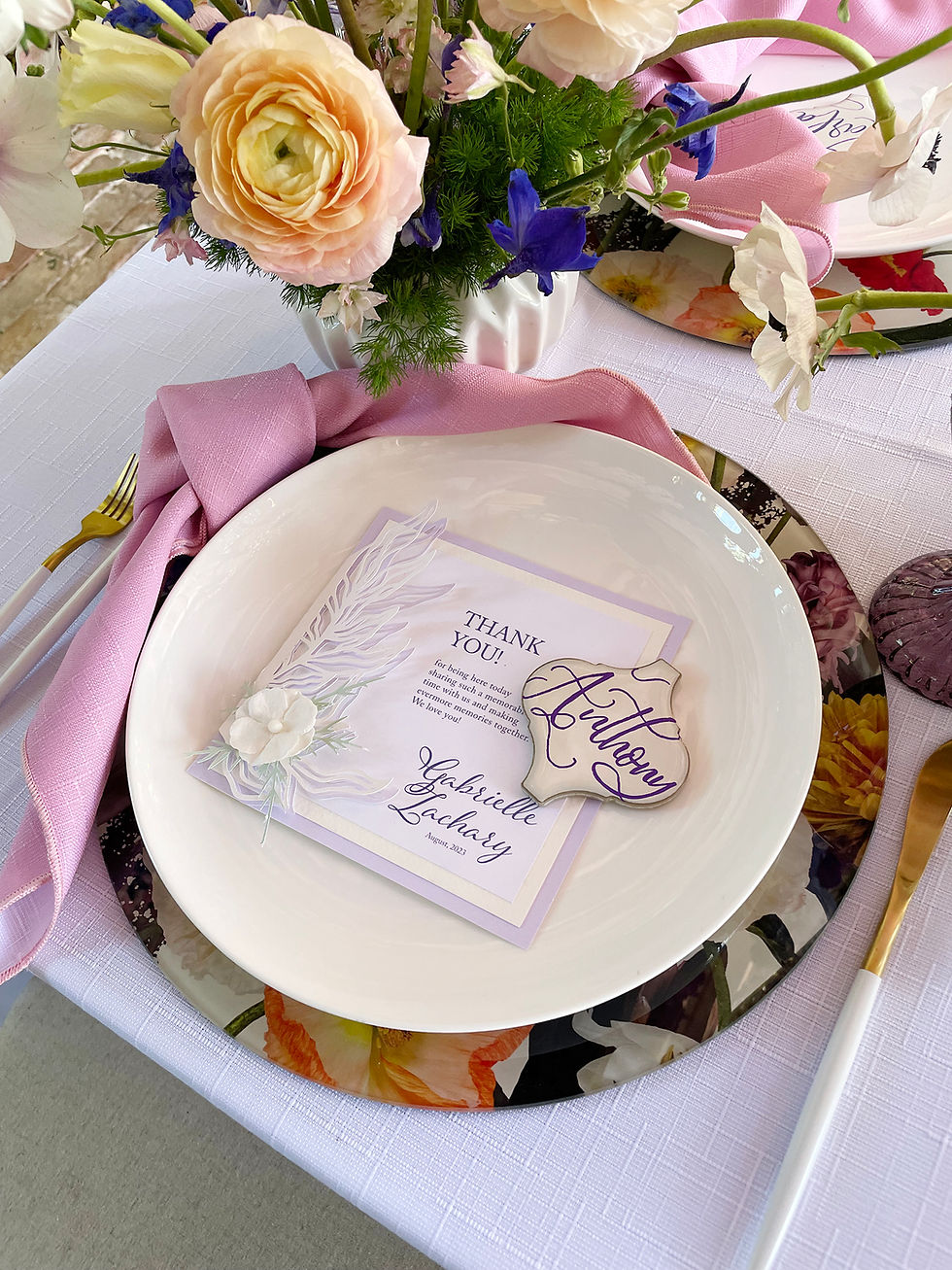
Personalized place card.
The word is familiar, and it is useful. It tells couples that something can be adjusted for them, marked with their names, shaped around their palette, or made to feel closer to their celebration.
But personal is not one level of design.
It has many.
A name can be added to an existing layout.
A color can be changed.
A ribbon can be selected.
A motif can be adapted.
A suite can be built from the beginning around a story, a setting, and the way a couple wants their guests to feel.
All of these choices may have value.
They are simply not the same kind of work.
Bespoke does not begin when a name is added.
It begins when the design starts responding to meaning.

Selection Has Its Place
There is nothing wrong with choosing from options.
A couple may select a paper color, a type style, an envelope, a ribbon, a liner, or a format from an existing collection. Those choices can be beautiful, efficient, and perfectly appropriate for many celebrations.
Selection creates direction within a defined structure.
It allows a finished design to move closer to a couple’s taste without asking the design to become something entirely new. The original composition remains. The choices happen around it.
That can be enough.
Not every celebration needs a fully bespoke process. Not every couple wants one. Not every budget or timeline calls for one. A well-made semi-custom suite can still be elegant, useful, and thoughtfully produced.
The distinction matters only because language matters.
When every adjusted piece is called bespoke, the word loses its meaning.
Customization Is an Adaptation
Customization goes further than selection.
It may shift colors more intentionally, adjust wording, refine materials, change scale, modify a layout, or incorporate a detail that makes the piece feel more specific to the celebration.
It can be a meaningful middle ground.
The design begins with an existing foundation, but the foundation is adapted. The work is to make the original direction fit better, feel closer, and serve the event more clearly.
Still, the design has already begun before the couple enters the process.
That is the important difference.
Customization responds within a frame.
Bespoke creates the frame.
Personalization Is Not Decoration Alone
Personalization is often understood as the visible sign of identity.
Names.
Initials.
A crest.
A monogram.
A venue illustration.
A favorite flower.
A custom color.
These details can be beautiful. They can make a suite feel more intimate, more recognizable, more connected to the people at the center of the celebration.
But personalization becomes strongest when it is not treated as decoration placed on top of a design.
It should emerge from the reason the design exists.
A monogram has more presence when it belongs to the architecture of the suite. A color feels more persuasive when it connects to place, season, memory, or mood. A detail becomes more than a motif when it carries a relationship, a family reference, a shared history, or a clear emotional purpose.
The question is not only, “Can this be added?”
The better question is, “Why does this belong?”
Bespoke Begins Before the Design Appears
Bespoke work begins earlier.
Before the paper.
Before the palette.
Before the typography.
Before the first layout.
Before the question of finishes.
It begins with listening.
What kind of celebration is this? What should guests understand before they arrive? What should the invitation feel like in the hand? What is formal, what is relaxed, what is private, what is expressive? What parts of the story should be visible, and what parts should remain quieter?
This is where the design begins to take shape.
Not as an object first.
As a point of view.
The suite may eventually include familiar pieces: an invitation, a details card, an envelope, a liner, a day-of note, a place marker, a keepsake. But in a bespoke process, those pieces are not chosen because they appear on a standard list.
They are chosen because they serve the celebration.

The Design Responds to the Story
A bespoke suite should not feel interchangeable.
It may be quiet.
It may be elaborate.
It may be classic.
It may be unexpected.
It may be made with paper, leather, wood, metal, fabric, or a combination of materials.
The level of ornament is not what makes it bespoke.
The response does.
Bespoke design considers how the story should become form. It looks at the venue, the season, the couple’s sensibility, the guest experience, the rhythm of the weekend, the degree of ceremony, and the emotional weight of the occasion.
Then it decides what should be made.
A suite may need restraint.
A day-of piece may need intimacy.
A material may need texture.
A detail may need to become an object.
A gesture may need to replace something larger and less personal.
This is where authorship enters.
The design is not trying to prove that everything can be customized.
It is trying to make every choice feel inevitable.
Why the Difference Matters
The difference between selection, customization, personalization, and bespoke design is not a hierarchy of good and bad.
It is a difference in depth, time, authorship, and purpose.
A selected suite answers a preference.
A customized suite adapts a direction.
A personalized suite carries visible markers of identity.
A bespoke suite builds its language from the celebration itself.
Understanding that difference helps couples and planners choose well.
It also protects the work from becoming confused with surface change. A suite can include beautiful details and still feel generic if those details do not belong to a larger idea. Another suite can be visually restrained and feel deeply personal because every decision is connected.
Bespoke is not always more.
Often, it is more specific.
A Studio Perspective
At Timeless Impress, bespoke does not mean adding everything.
It means listening until the unnecessary begins to fall away.
It means understanding what should be communicated, what should be felt, what should be held, and what should be remembered. It means knowing when a printed piece is needed, when a material object can say more, when a detail should be quiet, and when one gesture can carry the meaning of several expected pieces.
The work is not simply to make something beautiful.
It is to make something belong.
That belonging is what gives a piece its character. It is what allows a suite to feel connected to the celebration rather than attached to it. It is what turns paper, material, typography, and form into part of the experience.
Bespoke begins long before the finished piece is seen.
It begins in the decision to ask what the celebration truly needs.

For a related Studio Note on where meaningful customization truly begins, read Where Personalization Actually Begins.
For a broader reflection on how material choices communicate before language does, continue with What Paper Communicates Before a Word Is Read.
Studio Notes is an ongoing series exploring how structure, paper, and thoughtful design shape meaningful celebrations.


Comments