
Paper, Digital, or Both?

A Studio Note on choosing the right medium for each part of the wedding experience.
Wedding stationery is often discussed as if the choice is between paper and digital.
Printed invitation or wedding website.
Mailed RSVP or online form.
Details card or QR code.
Menu card or shared display.
Keepsake or convenience.
The conversation can become too simple very quickly.
Paper is sometimes treated as the more formal choice. Digital is sometimes treated as the practical one. One is imagined as beautiful, the other as efficient. One belongs to tradition, the other to modern life.
But the best celebrations rarely depend on choosing one side.
They depend on knowing what each moment needs to do.
A wedding is full of different kinds of information. Some of it needs to move quickly. Some of it needs to be remembered. Some of it needs to guide guests. Some of it needs to create atmosphere. Some of it needs to disappear after it has served its purpose.
The medium should follow the purpose.
That is where the decision begins.

The Question Is Not Paper Versus Digital
Paper and digital do different things well.
A printed piece has presence. It can be held, saved, photographed, touched, placed, opened, carried, and returned to later. It gives weight to a moment because it asks the guest to slow down and receive something intentionally.
Digital communication moves differently.
It updates easily. It travels quickly. It can hold links, maps, hotel information, shuttle changes, registry details, weather notes, and timing adjustments. It can answer practical questions without requiring every logistical detail to become a printed object.
One is not more thoughtful by default.
The thoughtfulness comes from the choice.
A paper invitation can feel careless if it is overloaded with information that should have lived elsewhere. A wedding website can feel thoughtful if it protects the guest experience from confusion. A printed menu can become part of the table. A digital RSVP can make planning clearer. A small printed note can carry more meaning than several unnecessary inserts.
The question is not which medium is better.
The question is what each piece is being asked to carry.
Digital Is Useful When Information Needs to Move
Some wedding information is practical by nature.
Hotel blocks.
Transportation.
Registry links.
Travel updates.
Parking notes.
Weather plans.
Weekend schedules that may shift.
Meal selections that need to be tracked.
RSVPs that need to be organized quickly.
Digital tools are often strongest here.
A wedding website can hold information that guests may need to revisit. It can change when plans change. It can reduce the number of printed inserts. It can keep links accessible. It can help a couple or planner manage responses in a clearer way.
This is especially useful for destination weddings, wedding weekends, multi-day celebrations, or events with guests traveling from different places.
Digital communication can also protect budget and reduce unnecessary waste.
That does not make the celebration less elevated.
It makes the communication more appropriate.
When information is likely to change, digital may serve the guest better than paper. When a guest needs to click, search, confirm, map, reserve, or update, the screen can be the more generous choice.
Generosity is not always tactile.
Sometimes it is clarity.
Paper Matters When Presence Matters
There are other moments when paper does something digital cannot fully replace.
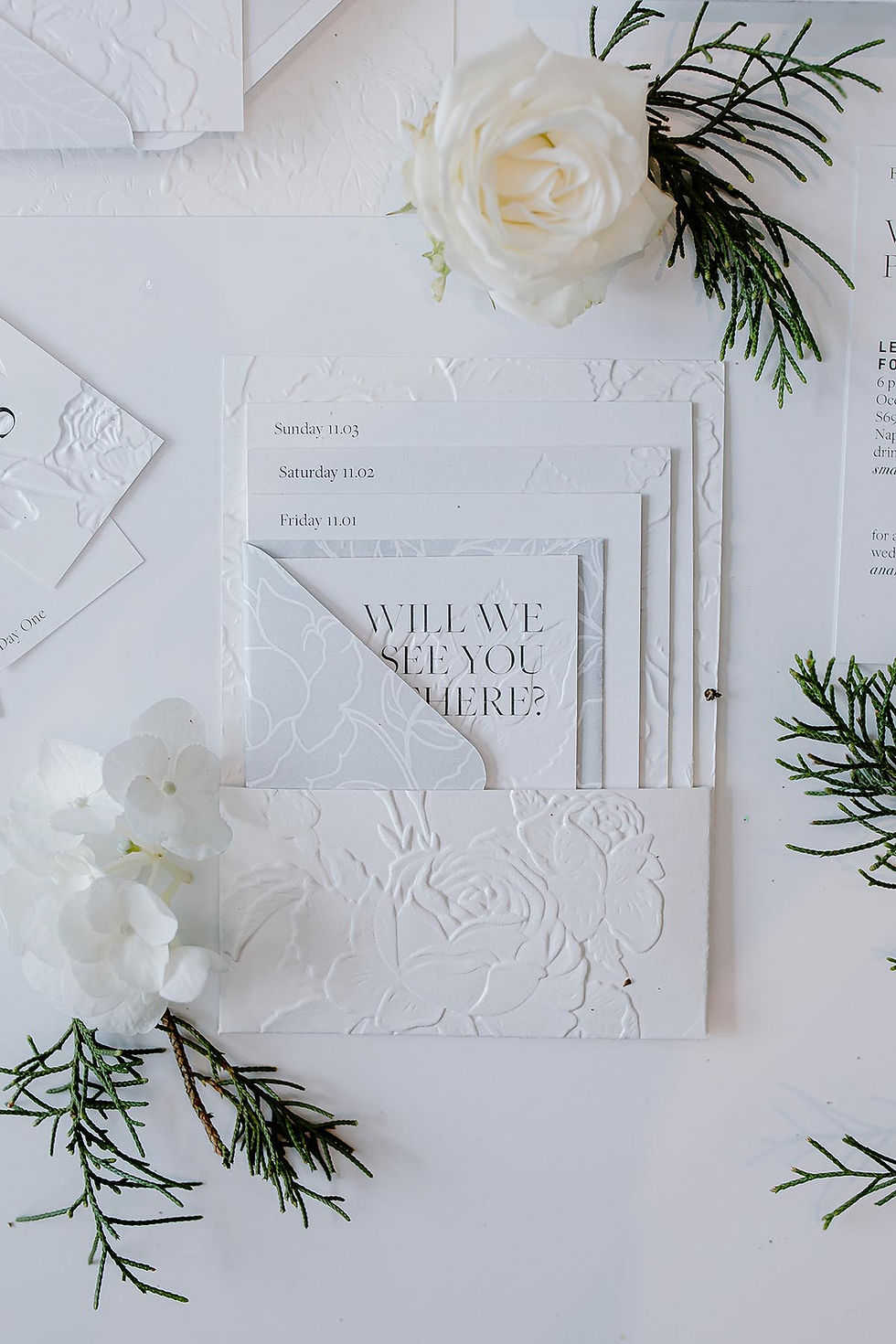
An invitation does more than provide a date and location. It introduces the tone of the celebration. It tells guests how to arrive emotionally before it tells them where to go physically.
The weight of the paper, the scale of the card, the envelope, the typography, the finish, the way the suite opens, the rhythm of each piece — all of this begins shaping the experience before the event begins.
Paper matters when the object is part of the ceremony of receiving.
It also matters during the celebration itself.
A menu can become part of the table.
A place card can make a guest feel expected.
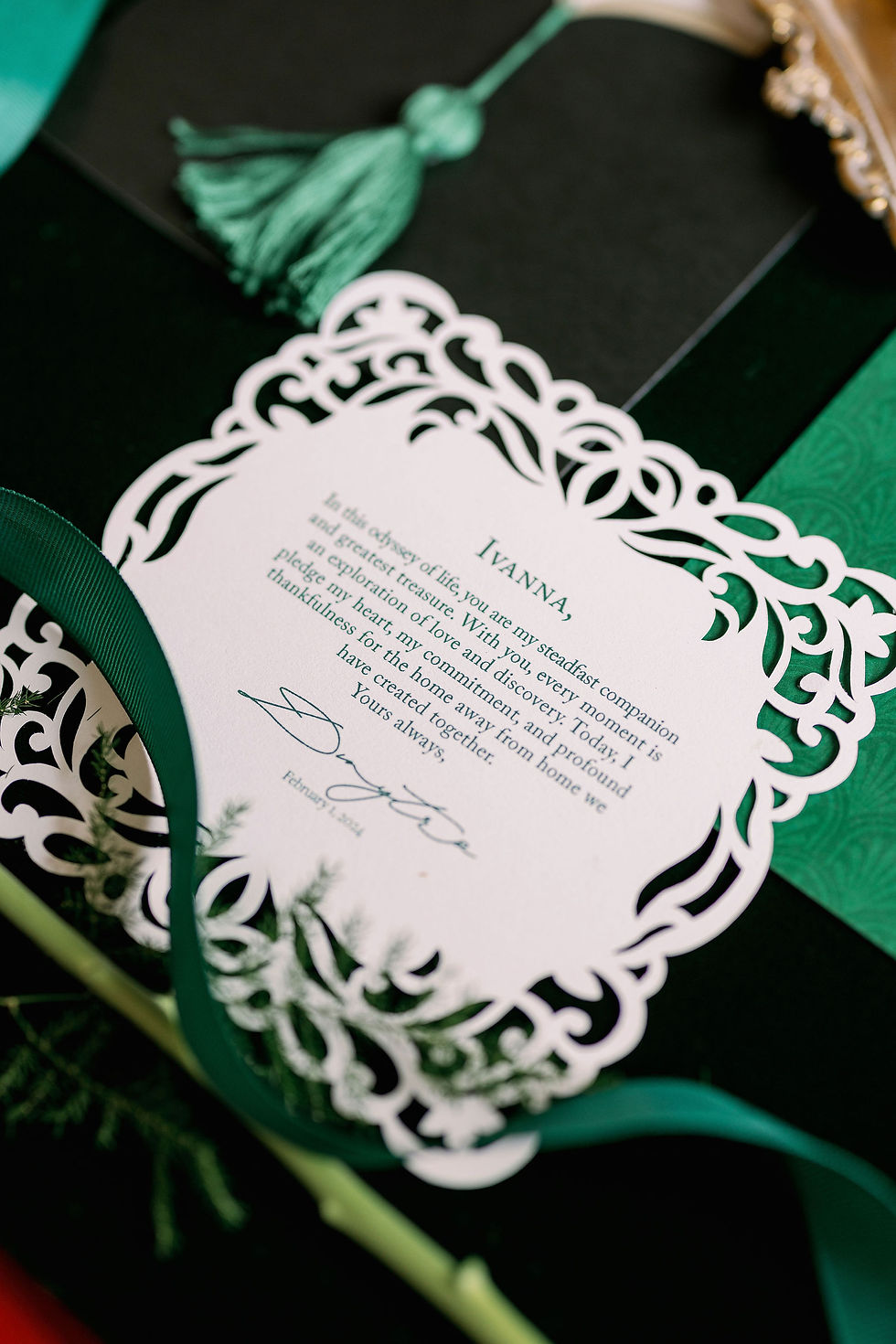
A welcome note can turn arrival into hospitality.
A vow book can become an heirloom.
A thank-you card can make gratitude visible.
A printed program can guide attention during a meaningful ceremony.
These pieces are not important because they are printed.
They are important when being printed gives them presence.
That distinction matters.
Paper should not be used only because weddings have traditionally used paper. It should be used when the piece deserves to be held, seen, placed, saved, or remembered.
Some Information Should Not Carry the Same Weight
One of the easiest ways to overdesign a wedding is to give every detail the same level of importance.
Not every instruction needs a card.
Not every update needs a printed insert.
Not every logistical note needs to become part of the suite.
Not every piece of information deserves the same material weight.
When too much is printed, the guest can lose the hierarchy.
The important pieces no longer feel important. The invitation becomes crowded. The suite becomes heavier without becoming more meaningful. The table becomes full, but not necessarily more thoughtful.
Good design helps decide what should be seen first, what should be held longer, and what can live quietly elsewhere.
A details card may be perfect for a simple note about attire, transportation, or a weekend outline. A wedding website may be better for hotel links, extended directions, registry information, and changing logistics. A QR code may be helpful in some contexts, but it should be used with care, especially if it interrupts the tone of a formal suite.
The goal is not to remove paper.
The goal is to let paper matter.
The Most Thoughtful Celebrations Use Both Intentionally
A wedding can use paper and digital together without feeling disconnected.
The printed invitation can carry the tone.
The website can carry the logistics.
The RSVP can be digital.
The welcome note can be printed.
The menu can live on the table.
The hotel information can live online.
The keepsake can be material.
The schedule can be updated digitally.
When each medium has a clear role, the experience feels more considered.
Paper becomes more powerful because it is not being asked to carry every practical burden. Digital becomes more refined because it is supporting the guest experience rather than replacing the emotional one.
This balance is especially important for modern weddings.
Guests expect convenience. They also notice care. They may appreciate a clear website and still remember the invitation. They may RSVP online and still keep a printed note. They may rely on digital directions and still feel welcomed by a place card, a menu, or a thoughtful object at their seat.
The strongest approach is rarely all paper or all digital.
It is an intentional system.

A Studio Perspective
At Timeless Impress, the question is never how much can be printed.
It is what deserves presence.
Some pieces need to be practical. Some need to be beautiful. Some need to do both. Some need to disappear after they have helped the guest. Others deserve to remain as part of the memory of the celebration.
This is why stationery planning should begin with purpose rather than a checklist.
What needs to be communicated?
What needs to be felt?
What may change?
What should be held?
What should be saved?
What will help guests move through the celebration with ease?
Paper and digital are both part of the language of a modern wedding.
The work is choosing which one should speak at each moment.
When that choice is made with care, less can feel more complete. The printed pieces gain meaning because they have room to matter. The digital pieces serve the celebration without flattening it.
Medium should follow purpose.
And the most thoughtful wedding communication begins there.
For a related Studio Note on deciding which wedding stationery pieces truly serve the celebration, read What Wedding Stationery Do You Actually Need?
For a broader Studio Note on how bespoke work begins with meaning rather than surface customization, continue with Where Bespoke Begins
Studio Notes is an ongoing series exploring how structure, paper, and thoughtful design shape meaningful celebrations.


Comments