
What Wedding Stationery Do You Actually Need?

A Studio Note on invitation suites, day-of details, and deciding which pieces truly serve the celebration.
Studio Note — From the Timeless Impress Atelier
Wedding stationery often begins as a list.
Save the date.
Invitation.
RSVP.
Details card.
Envelope liner.
Welcome sign.
Seating chart.
Program.
Menu.
Place card.
Favor.
Thank-you note.
The list can be helpful. It gives order to the many pieces that may surround a celebration. It helps couples and planners remember what could be needed, what must be mailed, what guests should know, and what the day may require.
But a list is not a design direction.
It can tell you what exists.
It cannot tell you what belongs.
The better question is not, “What stationery do we need?”
The better question is: what needs to be communicated, guided, welcomed, remembered, or felt?
That is where the real decision begins.

The Checklist Is Only a Starting Point
There are pieces that appear in weddings again and again because they solve real problems.
An invitation tells guests when and where to arrive.
An RSVP gathers a response.
A details card can clarify travel, accommodations, transportation, or weekend events.
A program can explain a ceremony.
A place card can guide a guest to a seat.
A menu can support the rhythm of the table.
These pieces have purpose.
But purpose changes from celebration to celebration.
A formal multi-day wedding may need more layers of communication. A destination wedding may require travel guidance, transportation details, and weekend pacing. A smaller dinner with close family and friends may need very little beyond a beautiful invitation and a thoughtful day-of gesture.
The expected list is not wrong.
It is simply incomplete.
It does not know the setting.
It does not know the guest count.
It does not know the level of formality.
It does not know what the hosts want people to feel.
That is why the checklist should begin the conversation, not end it.
What Must Be Communicated
Some stationery exists because guests need clarity.
They need to know the date, time, place, attire, RSVP process, and anything that may affect how they prepare. They may need to understand where to stay, how to move between events, what kind of weekend they are entering, or whether the celebration asks for a particular level of formality.
This is the practical foundation.
When that foundation is weak, even a beautiful suite can become confusing.
A guest should not have to search for essential information. They should not wonder whether the ceremony and reception are in the same place, whether transportation is provided, whether children are included, or whether a welcome party requires a separate response.
Good stationery reduces uncertainty.
It gives guests confidence.
It prepares them to arrive well.
That does not always require more cards. Sometimes it requires better hierarchy. Sometimes it requires moving information to a wedding website. Sometimes it requires one beautifully designed insert instead of several small pieces trying to carry the same weight.
The goal is not to print everything.
The goal is to communicate well.

What Deserves to Be Felt
Not every important piece is logistical.
Some pieces matter because they create atmosphere.
A save the date can build anticipation.
An invitation can establish formality.
A liner can create a private moment inside the envelope.
A program can make a ceremony feel more intentional.
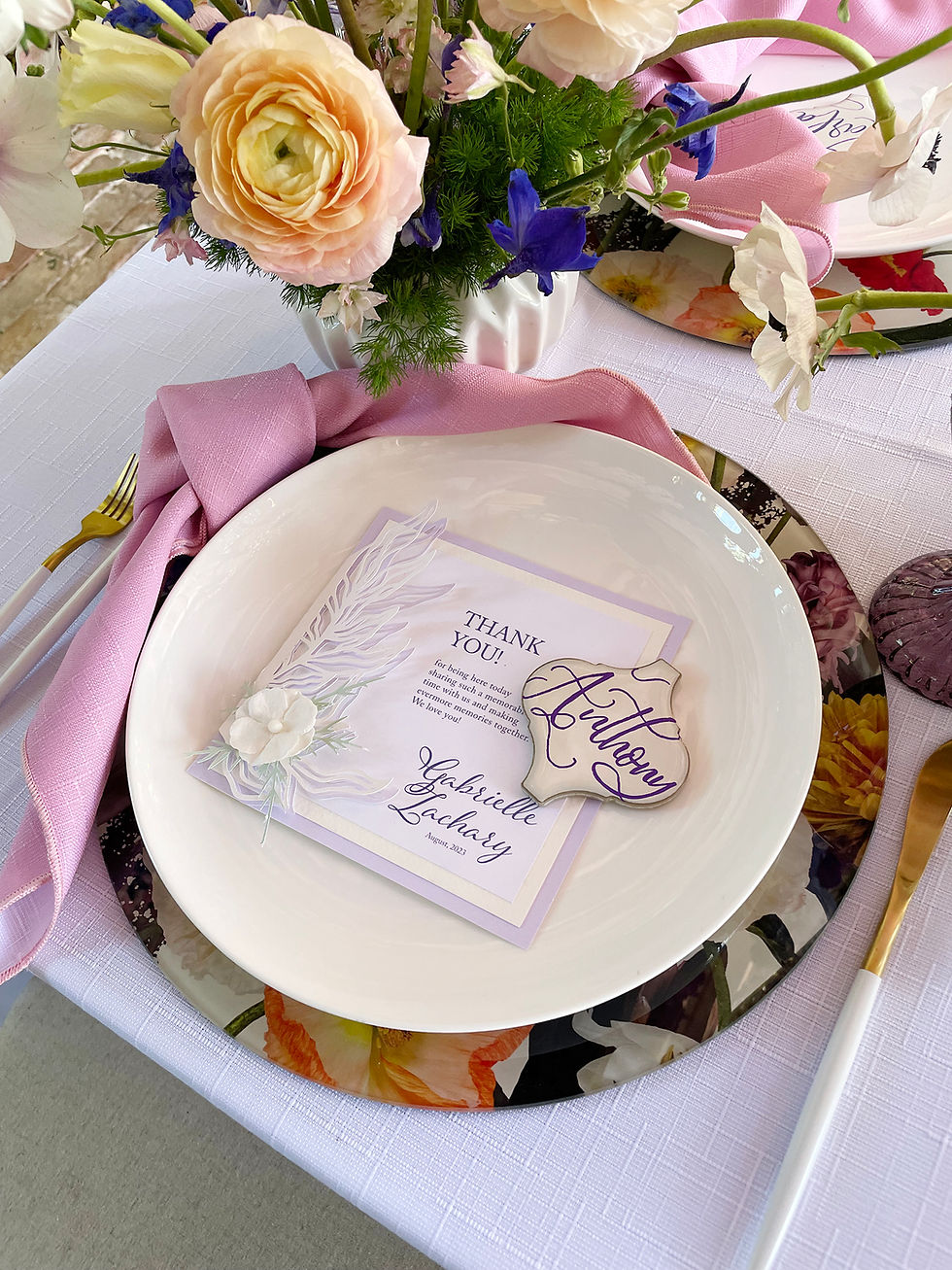
A note at the table can turn a place setting into hospitality.
A small object can become a memento.
These pieces do not only answer questions.
They shape feeling.
This is often where the most meaningful decisions happen, because the value of stationery is not measured only by information. It is also measured by how a guest receives the celebration.
Before they arrive, paper can suggest care.
During the event, a day-of detail can make the room feel considered.
Afterward, a keepsake can allow the memory to continue.
Those are different kinds of work.
They should not all be treated the same.
When Less Becomes Stronger
A celebration does not become more thoughtful because every possible piece is included.
Sometimes the strongest decision is to remove something.
A seating chart may not be necessary for a very intimate wedding. A printed menu may not be needed if the meal is already part of the experience in another way. A favor may feel less meaningful than a personal note. A separate insert may be unnecessary if the information is better handled digitally.
Removing a piece is not always a compromise.
It can be a form of direction.
Fewer pieces can allow more attention where it matters most: better paper, a stronger finish, a more distinctive format, a more personal day-of detail, or an unexpected material that guests will actually notice and keep.
This is where editing becomes part of design.
Not everything needs to exist.
The work is determining what deserves to.

Day-Of Details Should Earn Their Place
Day-of stationery and details are often the pieces guests encounter most closely.
They are at the entrance.
At the ceremony.
At the bar.
At the table.
In the hand.
Beside the plate.
That proximity matters.
A day-of piece should not be included only because it appears on a standard wedding checklist. It should guide, welcome, clarify, thank, or become part of the experience.
A program may be essential if the ceremony includes traditions guests may not know. A place card may be useful if seating is assigned. A menu may matter if the meal is part of the story. A welcome note may do more for hospitality than a large sign. A personalized thank-you card may become more meaningful than a favor that guests leave behind.
The question is not whether a piece is common.
The question is whether it has a role.
When day-of details are designed well, they do not feel like extras. They become part of the way the celebration is lived.

What Can Live Somewhere Else
Not every message needs to become a printed piece.
This is an important part of thoughtful design.
Wedding websites, digital RSVPs, email updates, planner communication, hotel room notes, or a personal welcome moment can all carry information beautifully when used with intention.
Digital communication is not the opposite of luxury.
Poorly considered communication is.
Sometimes digital tools protect the printed suite from becoming crowded. Sometimes they allow paper to remain more elegant. Sometimes they make updates easier and prevent guests from relying on outdated information.
The medium should follow the purpose.
If the information is likely to change, digital may be better. If the message is emotional, ceremonial, tactile, or worth keeping, a physical piece may carry it more beautifully.
Using less paper deliberately can make the paper that remains feel more meaningful.
A Studio Perspective
The right stationery plan is not the longest one.
It is the clearest one.
Some pieces inform.
Some guide.
Some welcome.
Some create atmosphere.
Some become keepsakes.
Some are expected, but unnecessary.
Knowing the difference is part of the design.
An invitation suite should not be asked to carry the entire celebration. Day-of details should not be added only because they are familiar. Digital tools should not be dismissed when they serve the guest better. And beautiful materials should be reserved for the moments where they can be truly felt.
A thoughtful stationery plan is an act of editing.
It decides what should be printed.
What should be simplified.
What should become an object.
What should live online.
What should be held.
What should be remembered.
That is where stationery becomes more than a checklist.
It becomes part of the experience.
For a related Studio Note on choosing the pieces that create the most meaning, read Where to Place the Gesture.
For a broader reflection on how invitation pieces work together, continue with Why a Stationery Suite Is Designed as a System.
Studio Notes is an ongoing series exploring how structure, paper, and thoughtful design shape meaningful celebrations.

Comments