
The Entrance Is Never Neutral

A reflection on arrival, anticipation, and the choreography of being received.
The Threshold Begins the Story
There are places where the event begins before the event begins.
The opera is one of them.
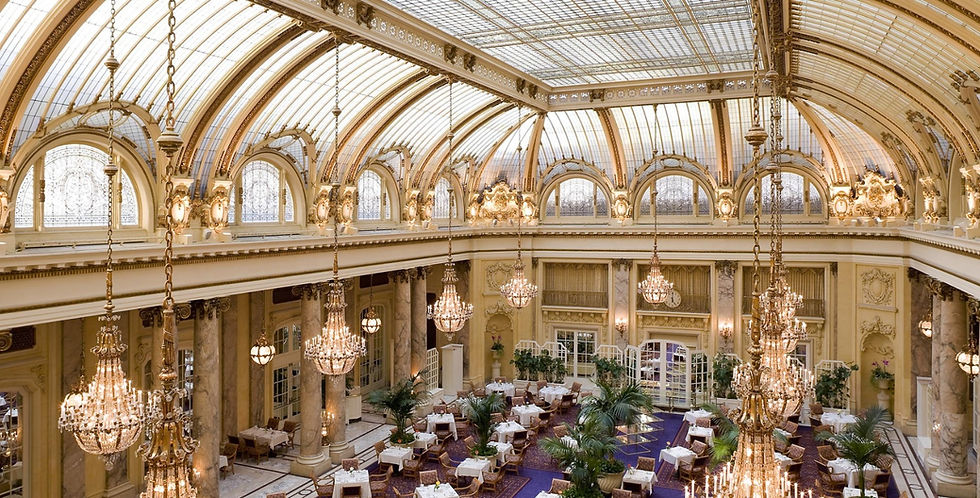
In Chicago, the approach is still through the street. Nothing especially theatrical announces itself in advance. Then the threshold is crossed, and the atmosphere changes almost immediately.
It heightens.
The air feels more deliberate.
The elegance becomes legible.
Refinement is no longer an idea. It is a condition of the room.
People linger before the performance with a kind of practiced ease, holding cocktails, reading one another, softening their voices as if the evening has already asked something of them.
The mingling is part of it.
The anticipation is part of it.
Even the waiting feels composed.
I remember going to see Verdi’s Rigoletto and realizing that the experience had begun well before the curtain rose.
It had begun at the entrance.
That is what certain thresholds do. They do not simply move people from outside to inside. They convert ordinary time into event time. They prepare the body before the mind has fully caught up. They teach guests, quietly and almost at once, how to arrive inside what is about to unfold.
And because I go to the opera in Chicago often, I have noticed that this transformation is never exactly the same twice.
The room changes with the people attending.
Not only because of what they wear, though that matters.
Because of how they enter.
How they gather.How they carry the expectation of the evening.
An entrance is never only the way in.
It is the first act of interpretation.

Arrival Changes the Body
We tend to think of entrances as logistical.
A staircase.A gate.A corridor.A path to the room.
But certain arrivals do more than direct movement.
They direct posture.
People slow down.
Lower their voices.
Look upward.
Stand straighter.
Adjust themselves before anyone has asked them to.
The threshold has already begun teaching them what kind of occasion this is.
A grand staircase produces one kind of anticipation.
A gravel path through a garden produces another.
A church door, heavy with shadow and silence, asks something different of the body than a villa terrace opening toward water and light.
This is why arrival matters so much.
It is not simply the prelude to atmosphere.
It is one of the first ways atmosphere is made.
Some Entrances Welcome. Others Perform.
Not every threshold is trying to do the same thing.
Some entrances are intimate.
Some are theatrical.
Some are ceremonial.
Some are public.
A red carpet staircase does not receive the body the way a private courtyard does.
A candlelit hall does not orient people the way a bright lawn reception does.
A cathedral asks for reverence.
A garden party asks for ease.
And sometimes the distinction is not between formality and informality, but between performance and welcome.
Some arrivals place guests on display the moment they enter.
Others absorb them gently into the evening.
Some make them feel read.
Others make them feel held.
That difference matters.
Because the entrance is already telling people what version of themselves the room expects.

The Best Entrances Create Orientation
A meaningful entrance does not only impress.
It orients.
It tells guests where to look first.
How quickly to move.
Whether to pause.
Whether to gather.
Whether the event begins in awe, in softness, in celebration, or in quiet attention.
This is one of the most underestimated acts of design.
Hosts often think about the room.
The flowers.The lighting.The table.The view.
But the transition into those things matters just as much.
How is the evening entered?
How is the shift from outside life into event life made legible?
What is the first emotional instruction?
The best entrances answer these questions without ever seeming to do so.
They make guests feel prepared, not processed.
Weddings Often Underestimate This Moment
Weddings, especially, tend to pour their attention into the ceremony space and the reception room.
And yet the event often begins much earlier.
At the valet.At the garden gate.
At the first tray passed in the courtyard.
At the path lit just enough to slow the body.
At the sound of music heard before the room is seen.
The invitation prepares the imagination.
The entrance prepares the body.
This is why some celebrations feel immediate.
Not rushed.Immediate.
The guest does not need to be told that they have entered a different register. The threshold has already done that work. Tone has already moved from abstract to physical.
A good arrival does not simply lead to the room.
It confirms the world the invitation promised.

A Good Entrance Makes the Event Feel Held
The most memorable arrivals are not always the grandest.
They are the ones that make people feel that the event has already begun caring for their experience.
That care may look like ceremony.
Or ease.
Or suspense.
Or calm.
But it is always a form of authorship.
A threshold can tell a guest:
you are welcome here.
It can also tell them:
pay attention now.
The strongest entrances often do both.
That is why an arrival can feel luxurious without being excessive.
Or intimate without being plain.
Or formal without becoming cold.
What matters is not how much is being shown.
It is whether the entrance knows what it is trying to ask of the room.

The First Act of Authorship
We often imagine that the event begins with the procession.
Or the first toast.Or the first note of music.Or the first glimpse of the bride stepping out of the car.
But the ceremony begins earlier than that.
It begins when people cross into a space that has already started receiving them.
That is the deeper work of the entrance.
It is not only the way in.
It is the event’s first act of authorship.
For a related reflection on how atmosphere begins shaping behavior before an event unfolds, read What the Room Teaches.
For a broader reflection on how guests learn to belong visually before the room is entered, continue with The Dress Code Is the First Script.
Ritual Field Notes is an ongoing series exploring ceremony, symbolism, and the architecture of meaning.


Comments