
The Dress Code Is the First Script

A reflection on attire, social permission, and the visual choreography of belonging.
There was a time when the Met Gala felt less like a parade of attendance and more like a concentrated cultural signal.
It did not simply gather visibility.
It directed it.
This year’s Met Gala was built around the Costume Institute exhibition “Costume Art” with the dress code “Fashion Is Art,” a brief broad enough to invite interpretation from many directions.
What struck me was not that people interpreted the brief differently.
That has always been part of the ritual.
It was that the differences no longer felt held by the same script.
Some arrived in near-costume.
Some in default glamour.
Some in garments that seemed to belong to an entirely different conversation.
The issue was not taste alone.
It was legibility.
A dress code works when it gives people enough structure to enter a room with confidence, while leaving enough space for individuality to remain visible.
When that structure weakens, the event may still be glamorous.
But it becomes harder to read.
And once a room becomes harder to read, it also becomes harder to belong to.

Dress Code Is Social Direction
Dress code is often treated as a practical note.
Black tie.
Cocktail.Festive.
Garden attire.
But these phrases do much more than instruct.
They tell guests how to imagine themselves inside the event.
How polished to be.
How relaxed to be.
How much personality is welcome.
How much restraint is expected.
Whether this is a room for sparkle, ceremony, irreverence, softness, or display.
That is why attire is never only about clothes.
It is emotional direction.
Before anyone has entered the room, the room has already begun in closets, mirrors, and quiet decisions made at home.
Clothing Changes Behavior
People stand differently in certain clothes.
They move differently.
Gesture differently.
Take up space differently.
A long gown slows the body.
A tuxedo sharpens posture.
A soft linen suit invites a different ease than black satin lapels ever could.
Even conversation shifts.
Some clothing makes people more ceremonial.
Some makes them more playful.
Some makes them watch themselves.
Some lets them forget themselves.
This is why dress code matters more than hosts sometimes realize.
It does not just shape the image of the event.
It shapes the behavior inside it.
The Best Dress Codes Clarify, Not Control
A strong dress code does not flatten personality.
It makes personality legible within a shared atmosphere.
That is a different kind of authority.
Not rigid.
Readable.
The best dress codes do not test guests.
They prepare them.
They say: this is the tone of the evening.
This is how to arrive.
This is how to belong without disappearing into the room, and without disrupting it either.
Too much rigidity turns people into uniforms.
Too much vagueness leaves them alone with interpretation.
An elegant code lives in between.
Clear enough to guide.
Open enough to breathe.
Dress Code and Belonging
This is where the subject becomes more interesting.
Because dress code is never culturally neutral.
Some people know immediately how to dress for a room.
Others have to decode it.
That difference may come from class.
From geography.
From age.
From profession.
From how often one has been inside rooms built on similar assumptions.
To understand dress code only as aesthetics is to miss its social intelligence.
It is also a language of access.
Who has learned it.
Who has inherited it.
Who can improvise within it.
Who worries about getting it wrong.
That is why the best hosts think carefully here.
Not only about beauty.
About hospitality.
A good dress code should create coherence.
It should not create quiet humiliation.

Weddings Write Their Tone Early
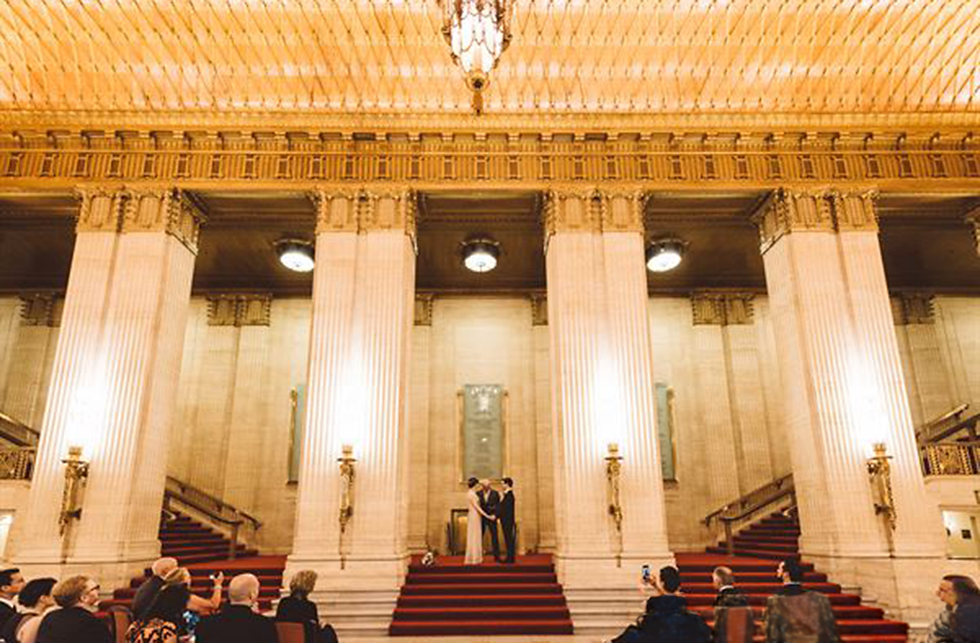
At a wedding, dress code is one of the first tools of authorship.
Long before the room is entered, tone is already being written through paper, phrasing, and dress.
The invitation names the occasion.
The dress code teaches the body how to arrive inside it.
This is part of why some celebrations feel immediately aligned.
The paper has spoken in one register.
The venue answers in another.
The attire completes the sentence.
And when those elements are working together, guests step into the atmosphere almost without noticing.
That is not accidental.
It is choreography.

When the Code Holds, the Room Holds
The most elegant gatherings are rarely the ones with the most dramatic instructions.
They are the ones where the code, spoken or unspoken, is clear enough that the room begins to cohere before the event officially starts.
You can feel it.
In the way people enter.
In the pace of their movement.
In the confidence of their posture.
In the absence of visual noise that has nothing to do with individuality and everything to do with mismatch.
A room does not become beautiful only because people are well dressed.
It becomes beautiful when attire, setting, and occasion are in conversation.
When what people wear does not merely decorate the event, but joins it.

The First Threshold
We often think the ceremony begins with the procession.
Or the first note of music.
Or the opening toast.
But it begins earlier than that.
It begins when guests decide what version of themselves the event is asking for.
That is the first threshold.
A dress code does not simply describe the evening.
It scripts the entrance.
And when it is written well, people do not just look appropriate.
They feel oriented.
They feel ready.
They feel, in the deepest sense, that they know how to belong to what is about to unfold.
For a related reflection on how atmosphere begins shaping behavior before an event unfolds, read What the Room Teaches.
For a more cultural reflection on spectatorship, circulation, and the afterlife of ritual, continue with When the Audience Is Elsewhere.
Ritual Field Notes is an ongoing series exploring ceremony, symbolism, and the architecture of meaning. Because when narrative defines a celebration, design does not decorate the moment. It authors it.


Comments