
Where to Place the Gesture

Updated: Aug 18
A Studio Note on budget, day-of details, and choosing the pieces that create meaning without adding unnecessary waste.
Studio Note — From the Timeless Impress Atelier
Many couples begin with a list.
Invitation suite.
Details card
RSVP.
Welcome sign.
Seating chart.
Menu.
Place card.
Program.
Favor.
Thank-you note.
The list can be helpful. It gives shape to the many decisions surrounding a celebration. It helps planners organize the day. It helps couples see what may be needed.
But a list is not a strategy.
And it is rarely where the most meaningful design begins.
A thoughtful celebration does not need every expected piece in order to feel complete. It needs the right gestures in the right places. It needs clarity around what should be communicated, what should be felt, and what guests should carry with them after the day has passed.
That is where the work begins.
Not with adding.
With choosing.

The List Is Not the Direction
There are pieces that appear again and again in weddings because they are useful.
A seating chart organizes guests.
A menu explains the meal.
A welcome sign marks arrival.
A place card gives direction.
A favor offers something to take home.
Each one can serve a purpose.
But when every expected piece is included automatically, the celebration can begin to feel assembled from habit rather than designed from intention.
The better question is not, “What should we include?”
It is, “What does this celebration need to say?”
For one couple, the answer may be formality and ceremony. For another, it may be gratitude. For another, a sense of welcome. For another, a moment of surprise. For another, a detail that makes every guest feel personally considered.
Once that answer is clear, the list changes.
Some pieces become essential.
Some become quieter.
Some disappear completely.
And often, the celebration becomes stronger because of it.

Budget Is a Creative Structure
Every budget is a real budget.
It should be respected, not apologized for.
The question is not how to make a celebration look as though more was spent. The question is how to place the investment where it will create the most meaning.
Sometimes that means a more restrained invitation suite, designed with excellent paper, strong typography, and one beautiful finish. Sometimes it means fewer mailed pieces so the day-of experience can carry more personalization. Sometimes it means replacing a large temporary installation with something smaller, more intimate, and more memorable.
Budget becomes powerful when it is directed.
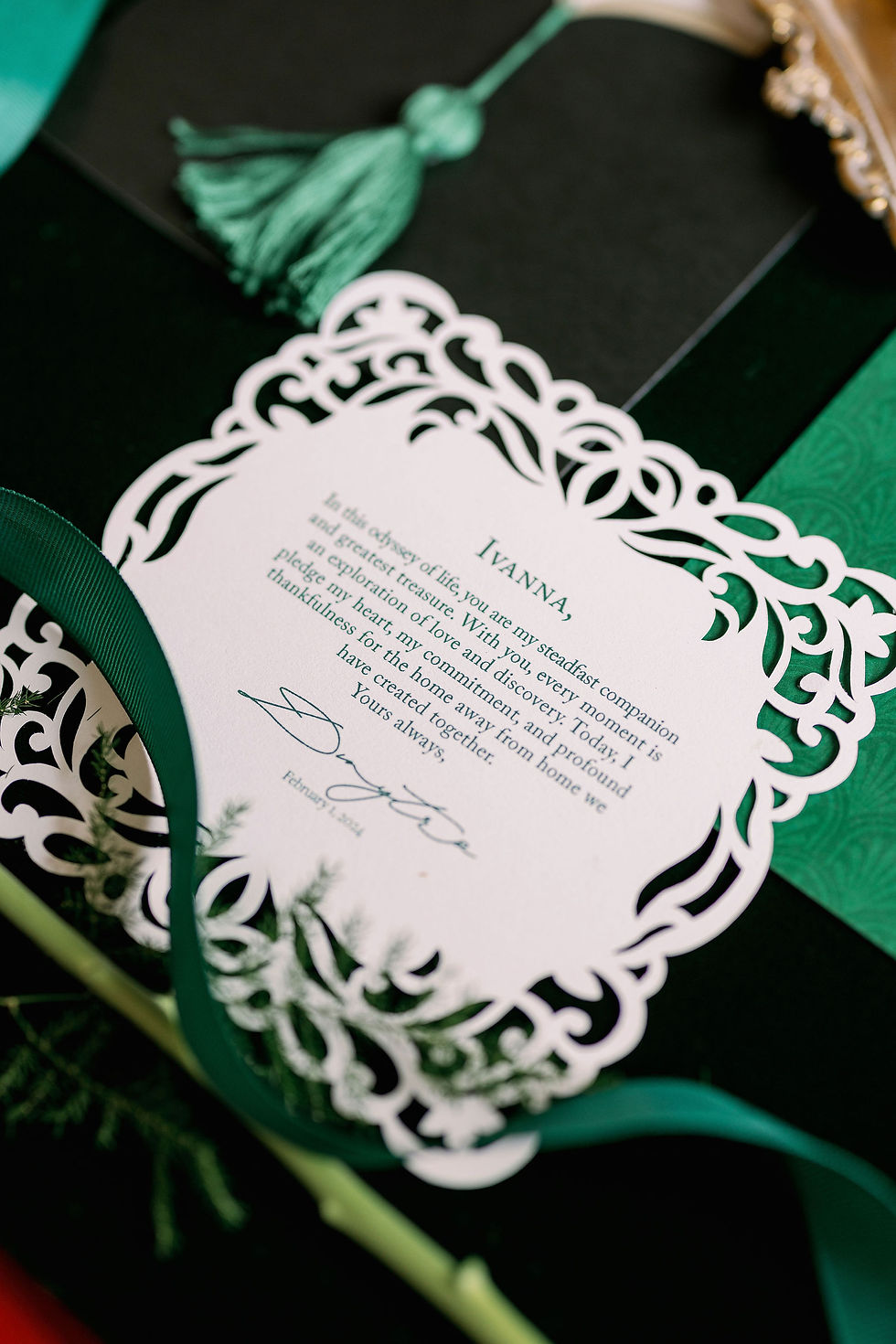
A single thoughtful piece can do the work of several expected ones when it is designed with care. A personal note can guide, welcome, and thank. A small object at the table can serve as a place marker, a keepsake, and a quiet expression of the couple’s point of view.
This is where creative direction matters.
The role of the studio is not to fill a checklist.
It is to understand where the gesture belongs.
Day-Of Details Are Expanding
The day-of experience is no longer limited to paper.
Paper remains one of the most beautiful and expressive materials we use. It can be quiet, tactile, formal, soft, structured, delicate, or sculptural. It can hold language with extraordinary intimacy.
But the table, the ceremony, and the guest experience now allow for a wider material language.
Leather.
Wood.
Metal.
Fabric.
Vellum.
Acrylic.
Dimensional printing.
Engraving.
Embossing.
Unexpected objects made for one specific celebration.
These materials open new possibilities.
They allow a place card to become an object.
A note to become a keepsake.
A directional detail to become part of the hospitality.
A small moment to feel personal without becoming excessive.
This is especially important because many traditional day-of pieces are created for only a few hours of use.
A monumental seating chart may photograph beautifully, but after the celebration it often has nowhere to go. A welcome sign may be seen briefly and then disappear. Menus may be cleared before the night has fully begun.
Some of those pieces are still appropriate in the right setting.
But they should be chosen with intention.

Replacing Objects With Experience
There are moments when the most elegant solution is not a larger object.
It is a better experience.
For a smaller destination wedding, especially one centered on family and close friends, a large seating chart may not be necessary. If the guest count is intimate and the seating needs to be guided, hospitality can do what signage often tries to do.
An usher can welcome a guest by name.
Offer a personal note.
Guide them to their table.
Make the arrival feel considered rather than managed.
The result is more human.
It reduces production.
It reduces logistics.
It reduces the need for a large temporary piece.
And it can elevate the guest experience because the moment becomes personal.
This is the kind of shift that interests me most: when one thoughtful gesture can replace several expected pieces and become more memorable than all of them.
A welcome sign, a seating chart, and a printed menu may each have a function.
But sometimes a personal note, delivered with care, can welcome, guide, and thank at once.
What Guests Actually Keep
Guests do not keep everything.
They keep what feels connected to a moment.
A piece may be small and still have emotional weight. It may be simple and still feel elevated. It may be useful during the celebration and meaningful afterward.
That is the difference between an item and a memento.
A memento carries something beyond information.
It carries a feeling.
A name.
A message.
A texture.
A memory of being considered.
This is why personalized day-of details can become so powerful. They are encountered inside the celebration itself, when the guest is already present, already feeling the atmosphere, already part of the room.
A personal note at arrival.
A place marker made in an unexpected material.
A small object that belongs to the table and later to the guest.
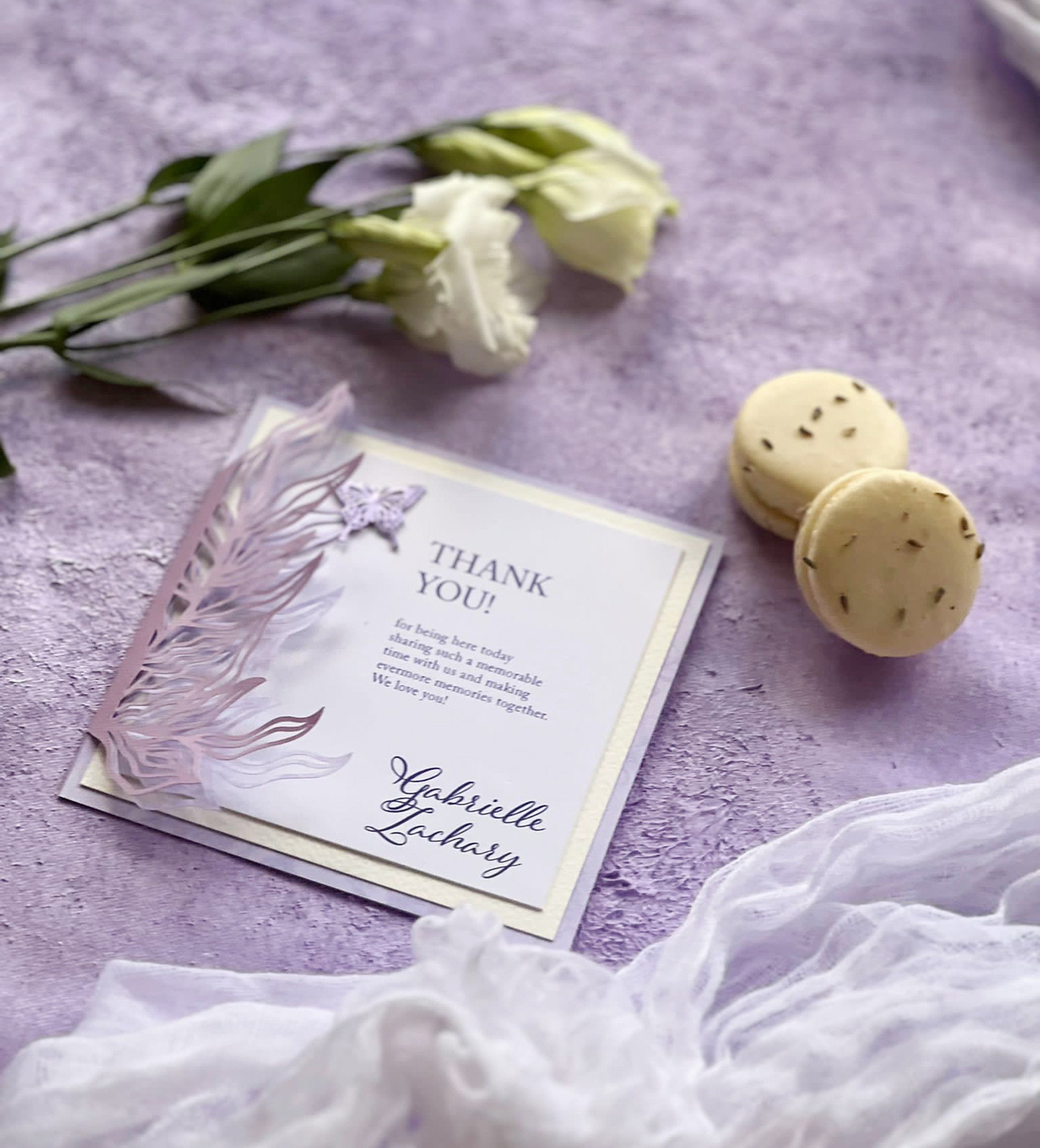
A thank-you message that feels specific rather than automatic.
These details do not need to be extravagant.
They need to be intentional.
Less Is More Means Intention
The phrase “less is more” is often confused with minimalism.
That is not how I understand it.
Less is more does not mean bare.
It does not mean plain.
It does not mean removing beauty.
It means that every decision has to earn its place.
A celebration can be layered, expressive, colorful, and deeply personal while still being edited. It can have a sense of abundance without relying on unnecessary production. It can create a visual moment without asking every element to become a spectacle.
The secret is in the details.
A minimal card can become extraordinary with the right paper, finish, proportion, and placement. A small object can carry more meaning than a large installation. A single gesture can make guests feel welcomed, guided, thanked, and remembered.
This is where design becomes more than decoration.
It becomes direction.
A Studio Perspective
The strongest celebrations are rarely the result of adding every expected piece.
They come from knowing what deserves attention.
The invitation introduces.
The arrival welcomes.
The table continues the conversation.
The keepsake carries the memory forward.
That is the fuller experience.
For us, the work is not about selling a product. It is about shaping a story through the right materials, the right gestures, and the right amount of restraint.
Sometimes that story is told through paper.
Sometimes through leather, wood, metal, texture, or an object made only for that moment.
What matters is that the piece belongs.
That it serves the celebration.
That it respects the budget.
That it reduces what is unnecessary.
That it gives guests something real to receive, remember, or keep.
A beautiful budget strategy is not about doing less for the sake of less.
It is about placing meaning where it will be felt most.
For a related Studio Note on how a suite becomes stronger when every piece works together, read Why a Stationery Suite Is Designed as a System.
For a broader reflection on how paper shapes the first impression of a celebration, continue with What Paper Communicates Before a Word Is Read.
Studio Notes is an ongoing series exploring how structure, paper, and thoughtful design shape meaningful celebrations.


Comments