
A Stationery Suite Unfolds in Time
- Karina Gaio
- Jan 17, 2025
- 3 min read

Studio Note — From the Timeless Impress Atelier
A wedding suite is rarely a single moment.
It arrives in stages.
It gathers meaning over time.
It prepares, guides, and lingers.
This is one of the reasons stationery matters so much. It does not simply announce a celebration. It teaches guests how to enter it.
Long before the room is seen, paper begins shaping expectation. And long after the day has ended, it is often paper that remains.
That is why a stationery suite is best understood not as one design, but as a sequence.
Before the Wedding Is Visible
The first printed piece is rarely the full story.
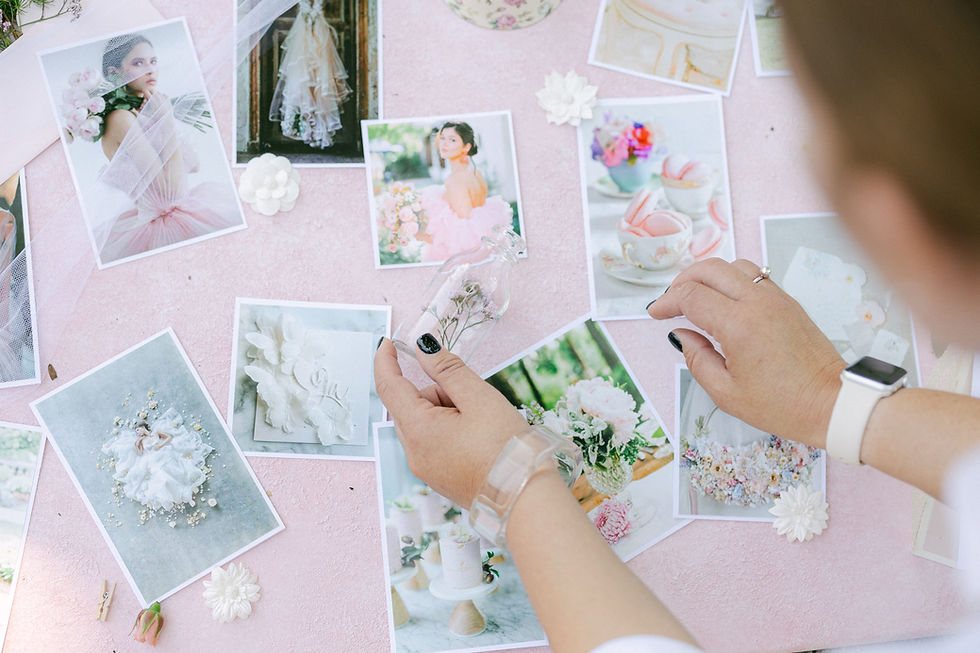
A save-the-date does something quieter. It signals tone before it explains detail. It gives the guest a first glimpse of what kind of celebration may be ahead: formal or relaxed, architectural or romantic, restrained or expressive.
Because it arrives early, it does not need to say everything.
It needs to begin well.
This is where pacing becomes part of design. A suite should not reveal all of itself at once. It should allow anticipation to build with intention.

The Invitation as the Center of Gravity
When the invitation arrives, the language of the event becomes clearer.
This is the point at which the suite can hold more: the visual structure, the material presence, the level of formality, the atmosphere the couple wants their guests to receive before they have entered the space.
An invitation is not only informational.
It is orienting.
It tells the guest how to read what follows. It carries the emotional register of the celebration and gives the rest of the printed experience somewhere to belong.
This is why the main suite matters so much. It becomes the center of gravity for everything around it.

Paper as a Guide
Day-of paper goods are often described as practical pieces.
And they are.
They tell guests where to go, what is happening, where to sit, what is being served. But when they are designed well, they do more than guide logistics. They continue the event’s visual language in real time.
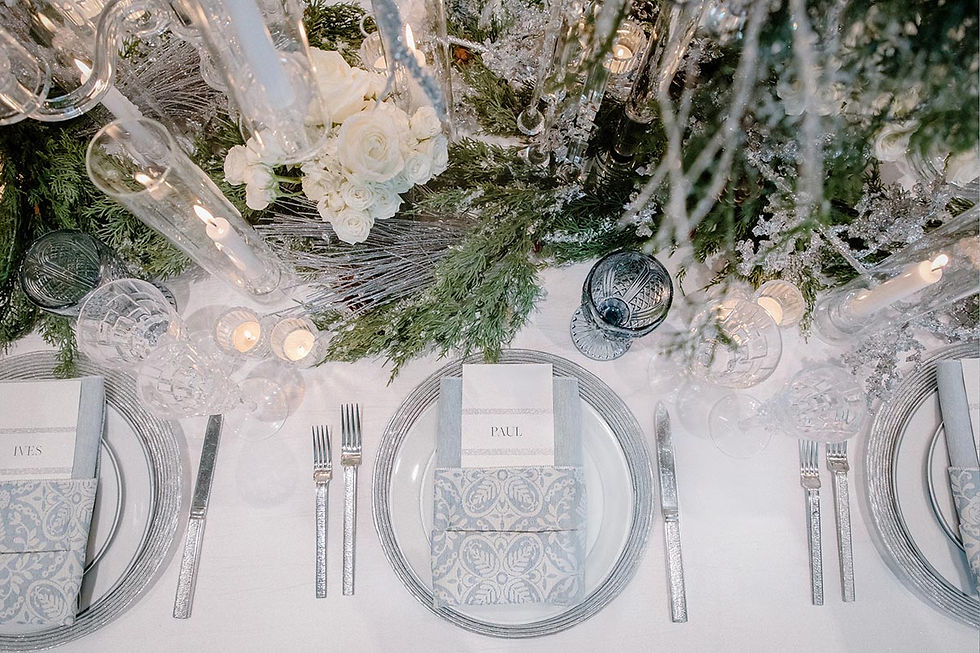
A menu can reinforce tone.
A place card can introduce intimacy.
A welcome piece can soften arrival.
A program can make ceremony feel more held.
These are functional objects, but they are also part of the guest experience. They allow the suite to move from anticipation into presence.
That transition matters.
It is what keeps the celebration from feeling fragmented.
What Comes After Still Belongs to the Story
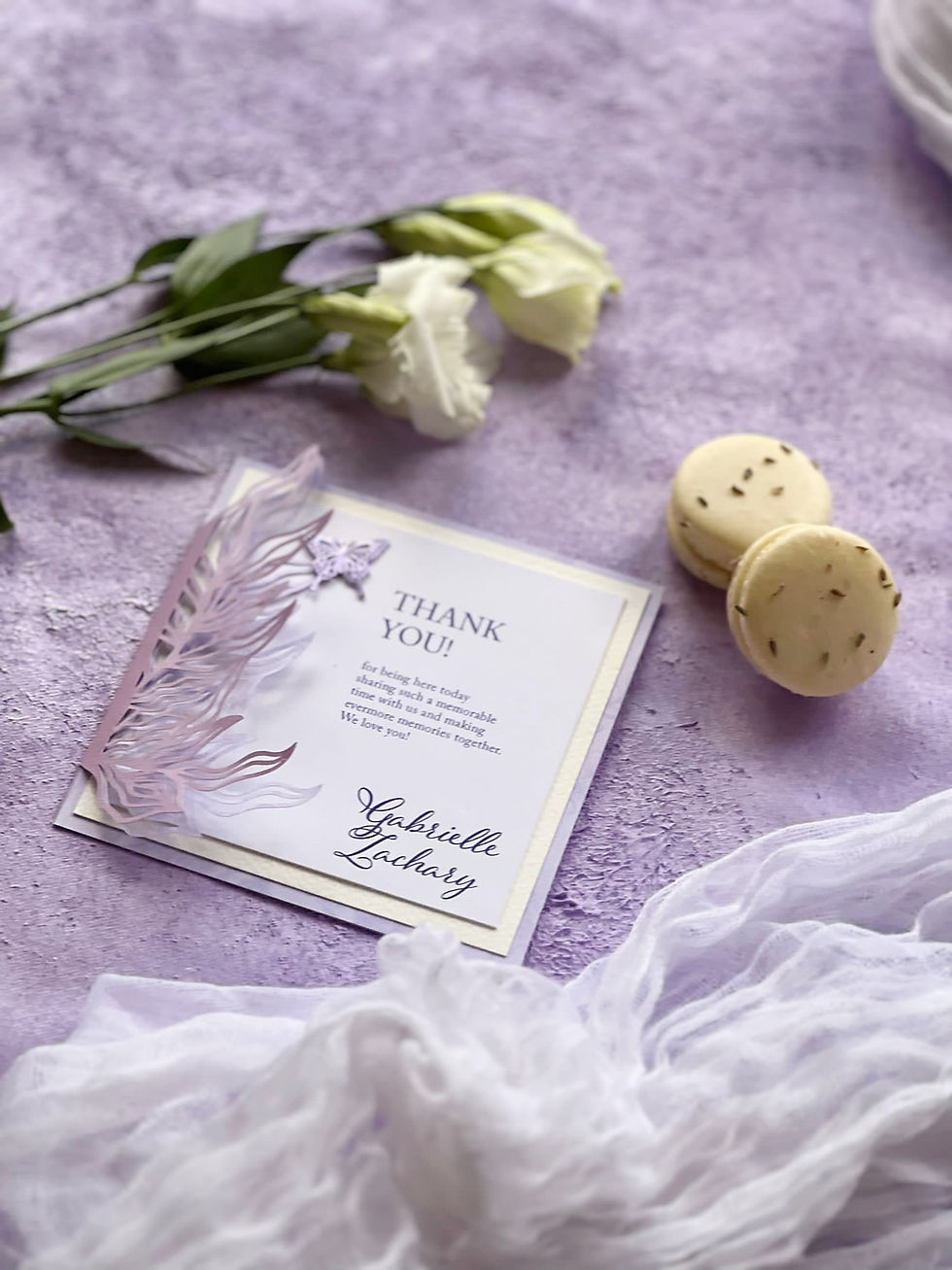
A thank-you card is often treated as the final courtesy.
But it is also the final note in the sequence.
It returns to the guest after the event has passed and allows the tone of the celebration to be remembered in a more personal register. At that point, the suite is no longer introducing or guiding. It is reflecting.
That change in function is part of what makes the overall stationery story so compelling. Each piece carries a different responsibility, but all of them belong to the same rhythm.
This is what gives a suite continuity.
Not repetition alone.Progression.
Why Timing Matters
Timing is often discussed only as logistics.
Mail this by then.
Order this by then.
Have this ready by then.
Of course, those things matter. But timing is also emotional. It shapes how a guest experiences the unfolding of a wedding.
Too much revealed too early, and the suite loses tension.
Too little too late, and the experience feels abrupt.
When pacing is right, each piece arrives with purpose.
That is what makes a stationery suite feel considered. It respects not only design, but sequence.
A Studio Perspective
What interests me most about wedding stationery is not only how a suite looks when fully assembled.
It is how it moves.
How the first piece begins the conversation. How the invitation deepens it. How the day-of elements carry it into the room. How the final printed gesture allows it to remain.
This is why stationery is never only paper and ink.
At its best, it is choreography.
For a related reflection on why a suite is designed through relationships rather than isolated upgrades, continue with Why a Stationery Suite Is Designed as a System.
For a broader Studio Note on how paper begins shaping tone before language fully arrives, read What Paper Communicates Before a Word Is Read.
Studio Notes is an ongoing series exploring how structure, paper, and thoughtful design shape meaningful celebrations.

Comments